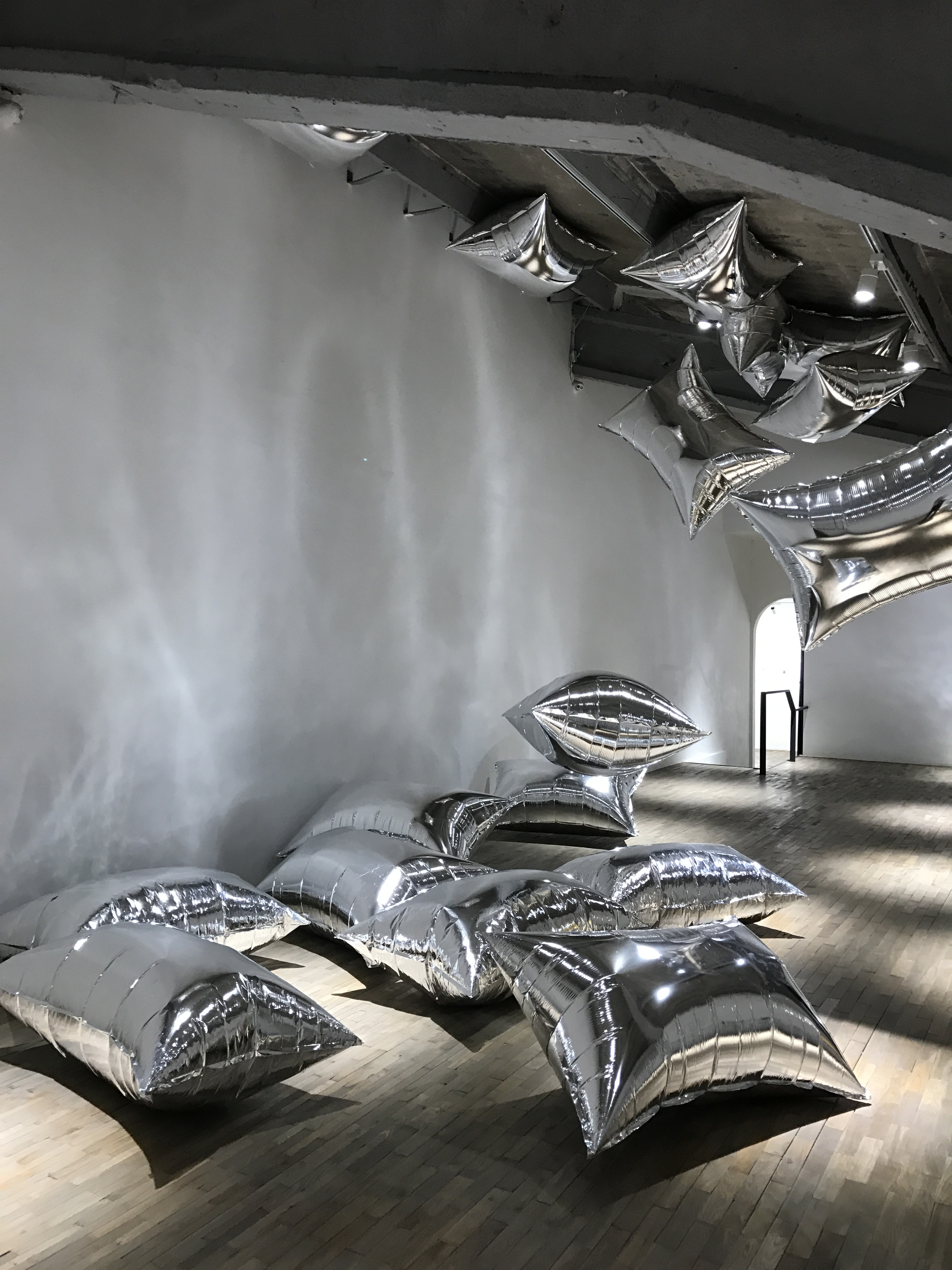
 {Warhol’s Silver Clouds installation at M Woods Gallery in the 798 Art Zone}
798 Art District is located in the Dashanzi area, to the northeast of central Beijing. It is the site of state-owned factories including Factory 798, which originally produced electronics.
 Beginning in 2002, artists and cultural organizations began to divide, rent out, and re-make the factory spaces, gradually developing them into galleries, art centers, artists’ studios, design companies, restaurants, and bars.
View these sites for groundbreaking art at M WOODS!!!
Andy Warhol Exhibition Debuts in Beijing
Enjoy,
K


 Stylish Heath