Our team has shared some beautiful photos of monuments and temples throughout Egypt from the pyramids of Giza in the north to the pylons of Karnak in the south. But, next on this list is the mortuary temple of Queen Hatshepsut at Deir el-Bahri and is in my opinion a most impressive structure. Everyone knows of Cleopatra and Nefertiti, but few know of the female pharaoh. 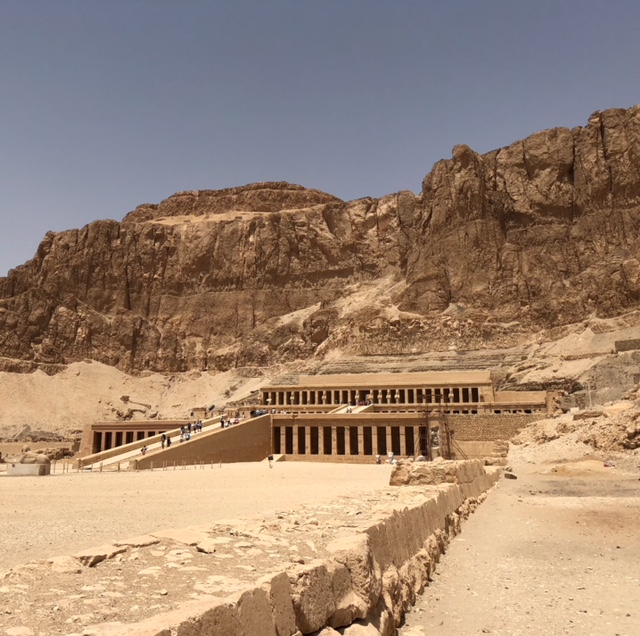
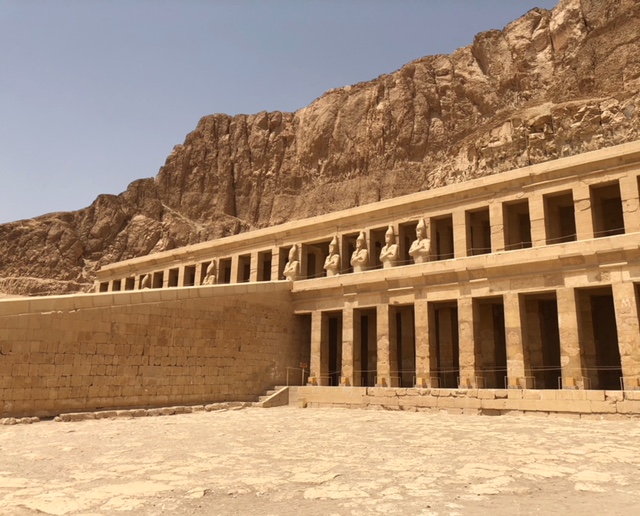
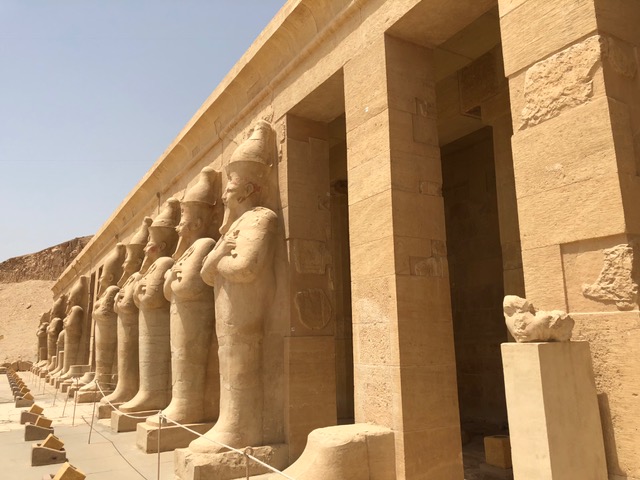 Hatshepsut was the fifth pharaoh of the 18th Dynasty, and what made her unique was she lived at a time when women were completely subservient to men, they were to remain passive with very few rights. In the complex households of a pharaoh the line of succession is rarely clear. Hatshepsut’s mother was Queen Ahmose who had several sons, but for one reason or another they died young, leaving the line of accession clear.
She focused her attention on rebuilding and repairing many shrines, but her architectural achievement was the mortuary temple at Deir el-Bahri. The absolute beauty of this structure is that it is embedded in a bay of cliffs on the west bank of the Nile River, and east of the Valley of the Kings.
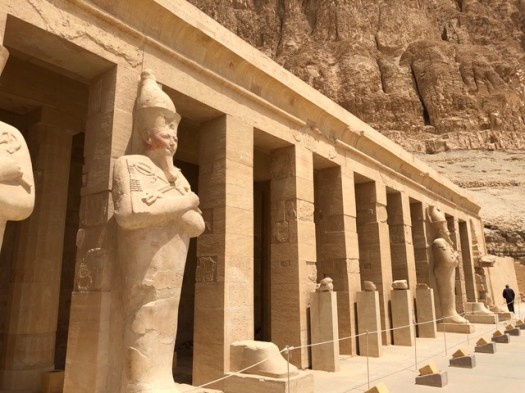

On one of the walls of the temple there is an inscription of a journey to the legendary land of Punt. The kingdom of Punt was a trading partner of the ancient Egyptians, and was described as a virtual paradise. The Egyptians were interested in obtaining myrrh for their use in temple rituals, as this aromatic resin could not be found locally. This folkloric country was never mapped out nor were there ever detailed directions on how to get to Punt. But, Hatshepsut created a series of reliefs with texts that show and describe an expedition to Punt, and the reliefs on the walls of Deir-el Bahri are the only depictions to Punt.
Travel stylishly,
K


 Stylish Heath