Hashemite Kingdom of Jordan

P1010103
P1010084
P1010075

{Amman, Jordan}
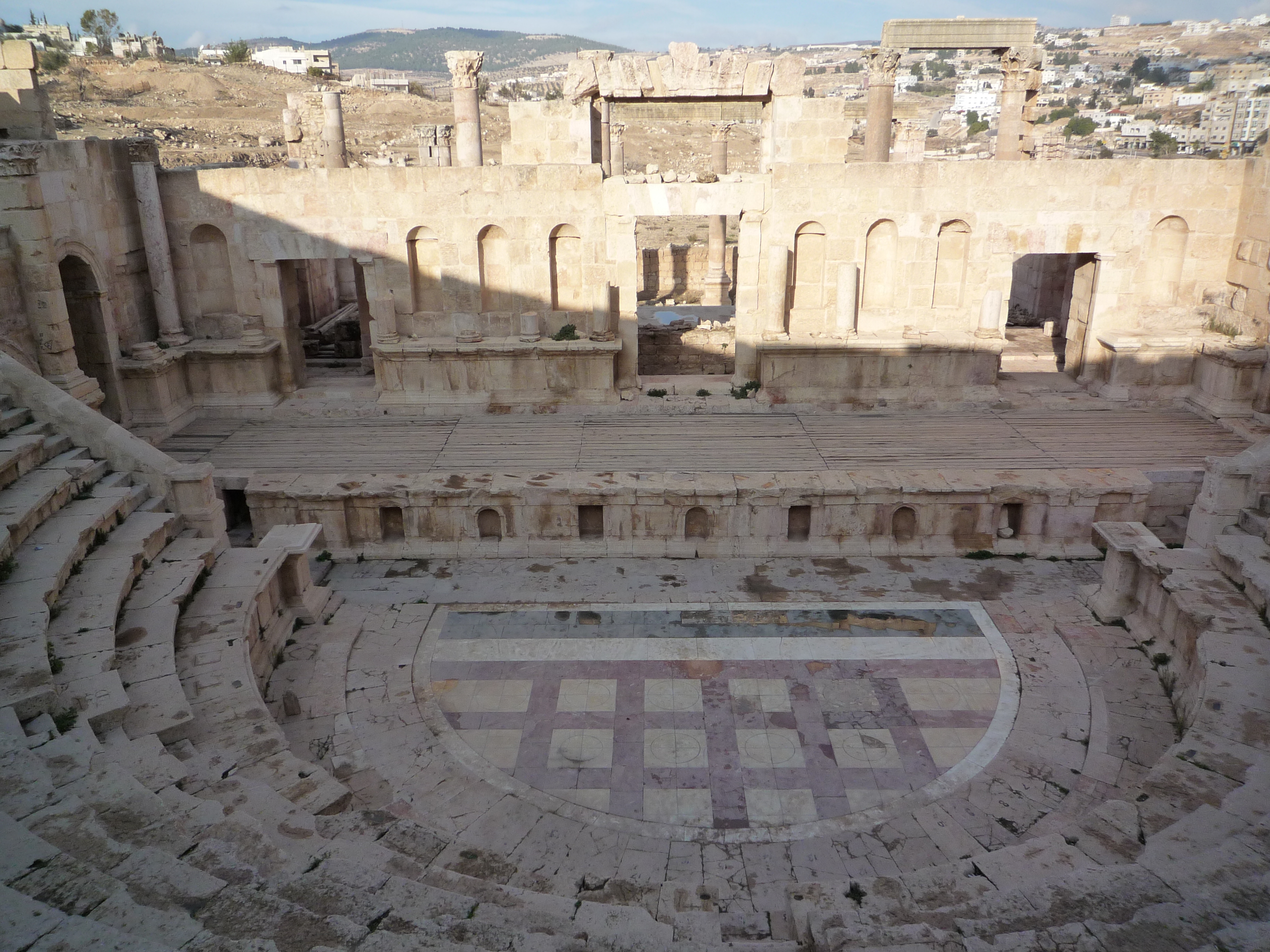
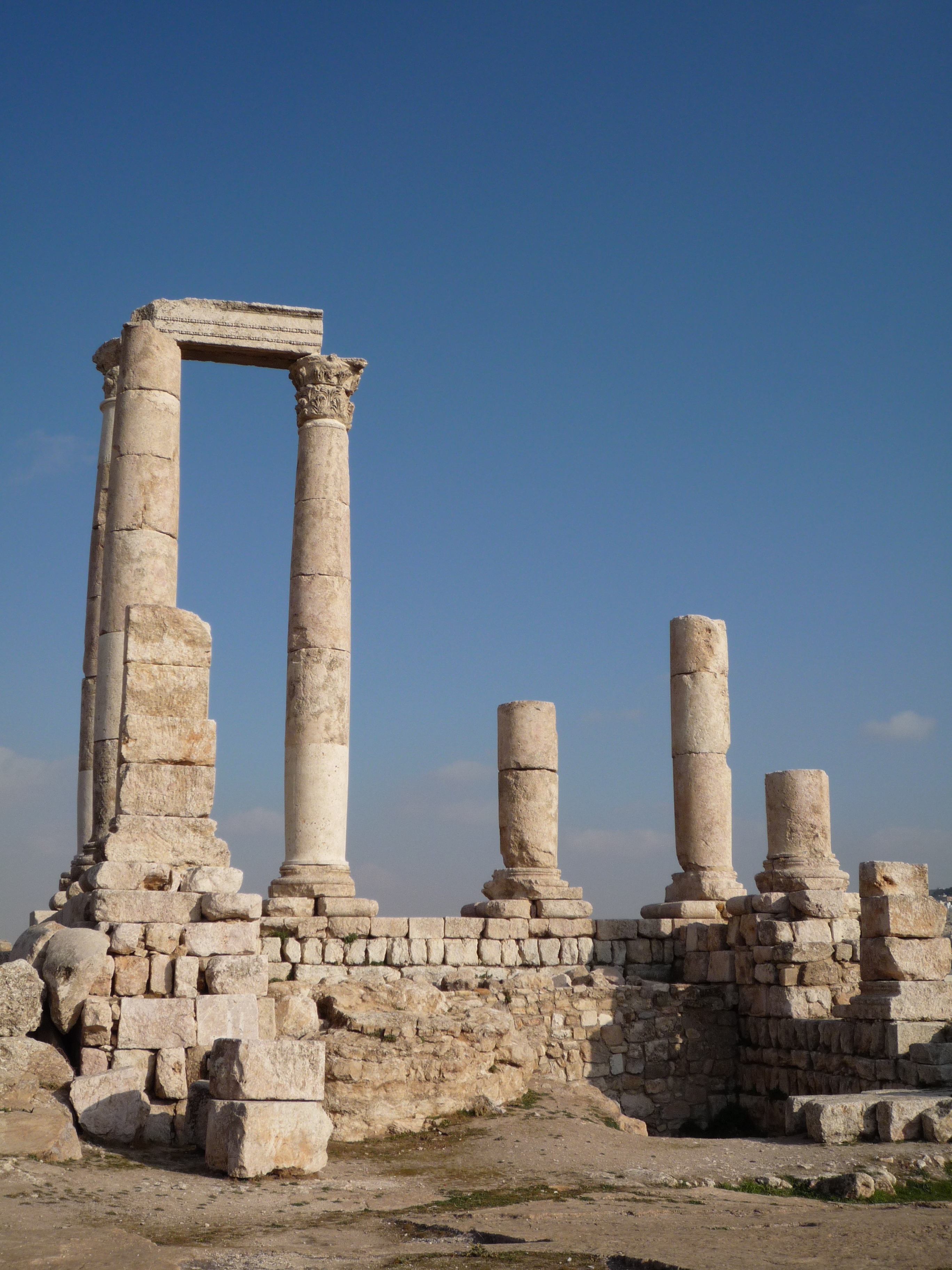
{Roman ruins in Amman} {Roman theater in Amman}

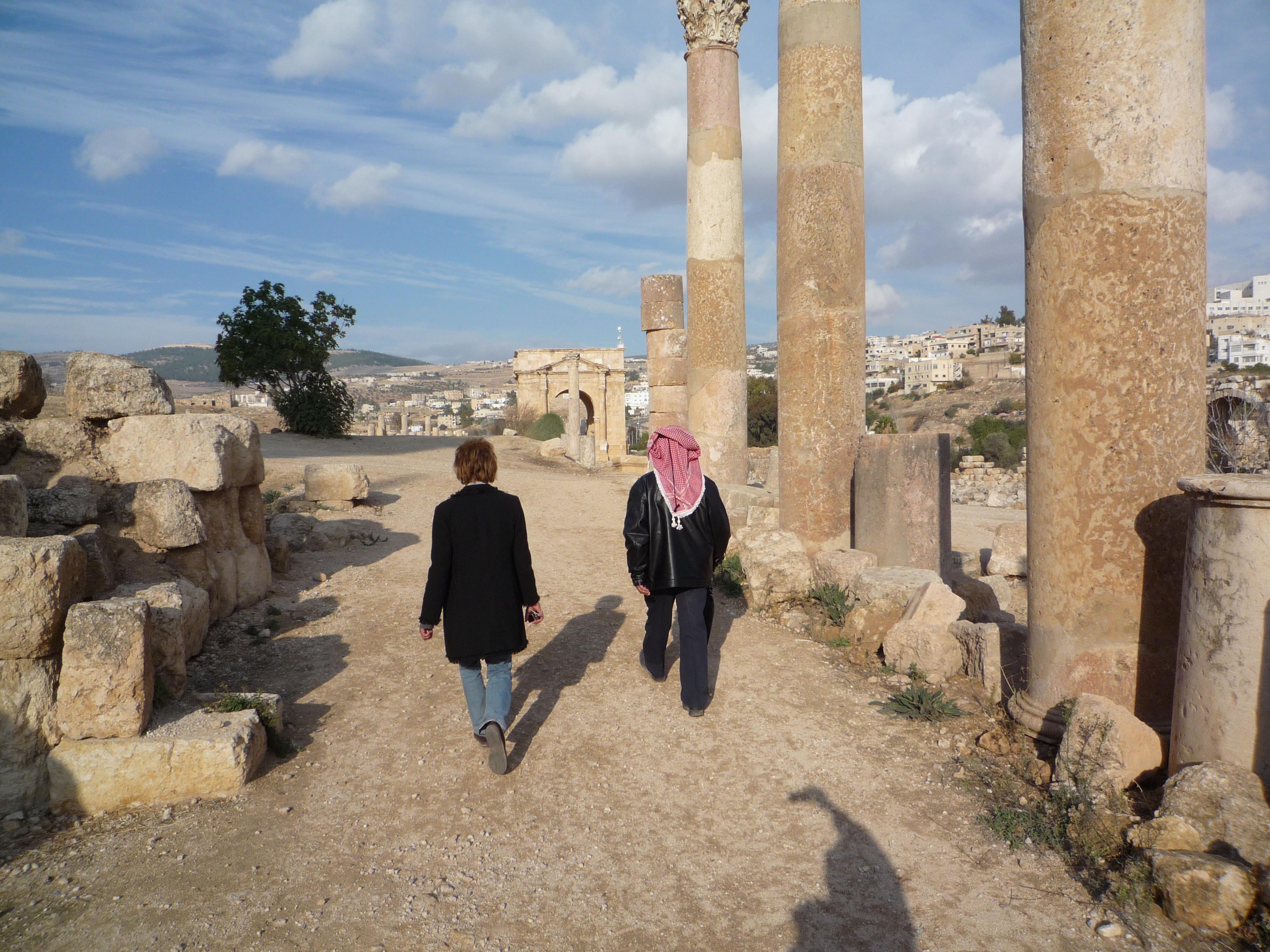
After carefully reviewing a few travel-logs and perusing my notes on our journeys throughout the Kingdom of Jordan a rush of wonderfully vivid memories began flooding my mind in regards to this Middle Eastern state. So, I decided to continue the “silk road” series, and since our last write-up was about Dubai, will now move west as so many Nomadic tribes have done throughout the centuries, meandering the valleys and ruins left by past ancient civilizations.

We arrived in Amman around 5:05 pm and settled in at the Jordan Valley Marriott on the Dead Sea. Exploring the hotels spa-like compound was a fabulous experience and our first stop was to float … yes that is the correct verbiage {floating and not swimming} in the Dead Sea because of the extreme saltiness of the water. As we approached the sea, humidity levels rose sharply, and while dipping into the sea water it was very warm for early evening. Huge amounts of salt deposits lined the shore, which contained calcium; magnesium, bromine, sulfur and bitumen, and combined these properties are quite therapeutic for those who come to spa at the Dead Sea.

P1010021
P1010036

{Canyon floor of Wadi Rum with camels}

Early the next day our guide took us on our first tour to Wadi Rum, which is located in the southern portion of the country. Our driver who was named Oman took us to a village outside of Aqaba where a family owned a quaint nut and spice shop. Oman always bought a few pounds of nuts for his son whenever he was in the area so; naturally I bought a 2-lb mixture of these fabulous tasting treats to have while we toured this open desert.

P1010041

P1010020
{Rock carved drawings and ancient Thamudic inscriptions}

Wadi Rum is one of a sequence of parallel faults that form sandstone and granite rock valleys in the Shara Mountains. As we traveled into the canyon you could see a handful of modern villages dotted with tents and camels that belonged to semi-nomadic Bedouins.

As the sun began to set and our excursion ended for the day, the weather turned extremely cold so, our guide ushered us into a Bedouin tent at the bottom of a cliff for tea. Surprisingly the tent blocked the severe winds that whipped up across desert ravine. There was a fire that warmed us and the hot tea was absolutely delicious. You could taste cardamom, mint and sage leaves that were brewed to perfection. While warming up and sipping tea I realized this was a great beginning to a gorgeously beautiful country.

For additional adventures in traveling around the world, visit this YOAIR link:
TRAVEL GUIDE TO PHUKET, THAILAND: HISTORY AND CULTURE

Travel stylishly,
K

Charleston, South Carolina

IMG_0562

After spending two spectacular days in Savannah, we drove Highway 17 to round out our stylish getaway in Charleston. The drive was relaxing as we took in the sights, the early American plantations built next to antebellum rice fields and the abundance of swamps with  very tall  cypress trees. As we drove past these murky waters my imagination kept turning to what actually lived within these dark rippling bogs; such as alligators, water moccasins or some type of lizard, and while pleased to know of this interesting wildlife, I was extremely glad nothing slithered across the road.

What did cross our line of vision were the enticing fruit and vegetable stands. We stopped to purchase a small basket of peaches from a farmer who stated he travels 52 miles every morning to setup his stand. He had the most fabulous looking blackberries, the plumpest tomatoes and bags of Vidalia onions that hung on the wooden stakes of this open market.

IMG_0475

We arrived in Charleston as the sun was beginning to set over the Ashley River and the view was spectacular because you could see out to the Charleston Harbor.

My primary purpose for being in this refined city was not only to see the historic sites, but also to focus on the elegant gardens and if possible come away with a few creative ideas for my own.

IMG_0491{Sweetgrass Baskets along Meeting Street}

The history on the art of “sweetgrass baskets” is steeped in tradition. Rice was a major crop during the Colonial period and though the conditions were perfect for growing this crop in South Carolina none of the plantation owners had knowledge of this particular plant. So slaves were brought from specific regions of West Africa because of their expertise in growing rice. These slaves also brought the craft of basket making to the new world, and did not allow the art form decline after the Civil War. The descendents and their culture remain throughout the Low Country area and are referred to as “Gullah” and their language is “Geechee”.

You can see the stands dotted along the highway as you enter the city, as well as on most street corners, setup to sell the most artfully designed wares.

IMG_0503 IMG_0505{Me posing against the Civil War cannons at the Charleston Battery}

Quaint homes were tucked along “The Battery” which is a defensive seawall and promenade to these stately manors and is named for a Civil War coastal defense artillery site.

IMG_0531{The Heyward-Washington House}

IMG_0529{Entrance to the “parterre garden” at the Heyward-Washington House}
IMG_0533{The remains of the 18th century garden are still seen in this present day field}

One of the prettiest gardens on our tour was at the Heyward-Washington House. I focused on the symmetry of the garden and how it was maintained with annuals and colorful plants in the midst of summer. The “parterre beds” were delineated by short, clipped boxwood hedges and filled in with a variety of plants. This formal garden was designed on level ground with gravel paths laid between the planting beds.

IMG_0556{Calhoun Mansion circa 1876, an Italiante House Museum and Charleston’s largest private residence}

IMG_0551{Calhoun Mansion water garden}

IMG_0545

The final garden that captivated my attention was at the Calhoun Mansion. The current owner is a collector of fine art and objects, and has filled this 24,000 square foot home to capacity with rare and beautiful pieces.

IMG_1684{Pralines and Fudge from The Fudgery on Market Street}

Now who can leave Charleston without eating some of the most delicious food in the south and trying their “pralines” which were absolutely fabulous. We stopped at The Fudgery on Market Street to taste the treats as they were being made and to talk with the sales staff, who coincidentally all sang beautifully together, which was an additional treat!!!

IMG_1694{Coconut cream cheesecake from Kaminsky’s}

We also tried slices of coconut cheesecake and key-lime pie from Kaminsky’s a few doors down from the Fudgery on Market to go with our “iced coffee’s”.

As always it is wonderful to be able to take in history, the beautiful sites and gardens, as well as taste such wonderful food all within the confines of historic Charleston.

K