During Memorial Day weekend our team divided into two groups, half of the crew headed for New York and the other to Washington DC. Our assignment was to peruse exhibits at the Metropolitan Museum, the Met Breuer, the National Gallery of Art and the National Museum of African American History and Culture instead of going to the beach or cooking out.
The first to check in was Sean at The Met on Fifth with an exhibition review on Fashion and the Catholic Imagination. The influence of catholic imagery on designers is the largest show the Costume Institute has staged, and it’s in two sites at the Met Fifth Avenue, and the Cloisters. The garments chosen specifically relate to religious objects in the collection.
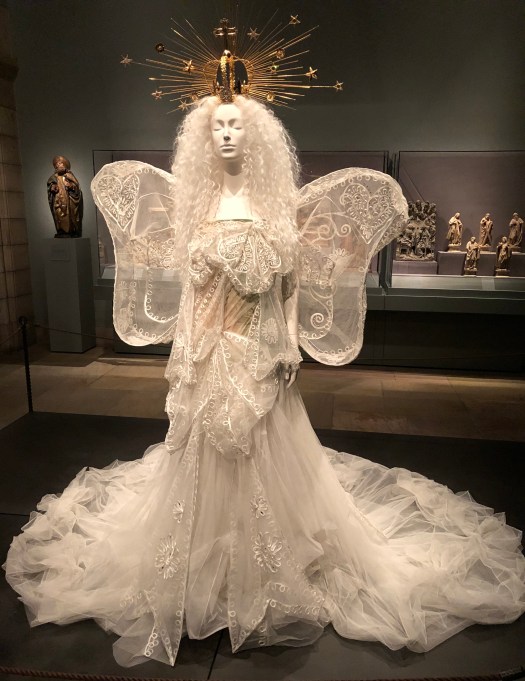 From the House of Dior, the Madonna Ensemble by John Galliano in the Medieval Sculpture Hall
 Frescoes from the Dominican community in Fiesole to which Fra Angelico {1435} belonged are the inspiration for the couture collection by Rodarte. Comprising of 10 dresses displayed in a wide range of silk fabrics-lamé, tulle, satin, taffeta, chiffon, organza, and georgette. The tonal variety echos the range of hues from the frescos.
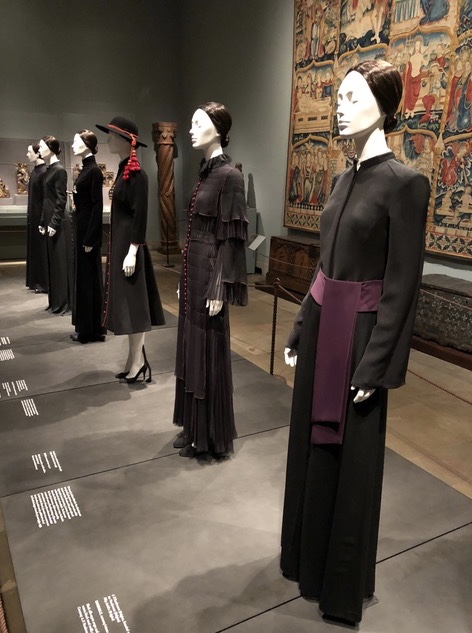 In the Medieval Sculpture Hall are garments by Sorelle Fontana {Italian, founded in 1943}. Il Pretino dress, autumn/winter 1956–57. Black wool crepe and red silk satin. Courtesy of Fondazione Micol Fontana Historical Archive, Rome, Italy.
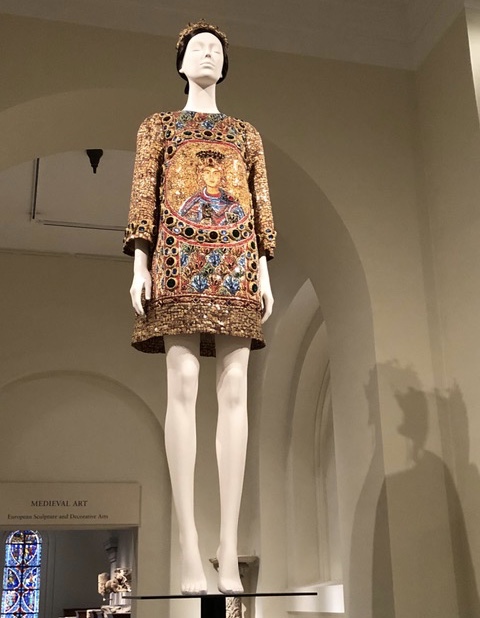 Domenico Dolce and Stefano Gabbana for Dolce & Gabbana. Ensemble, autumn/winter 2013–14. Courtesy of Dolce & Gabbana.
Stay stylish,
K



 Stylish Heath