Akrotiri, Santorini- the Bronze Age City

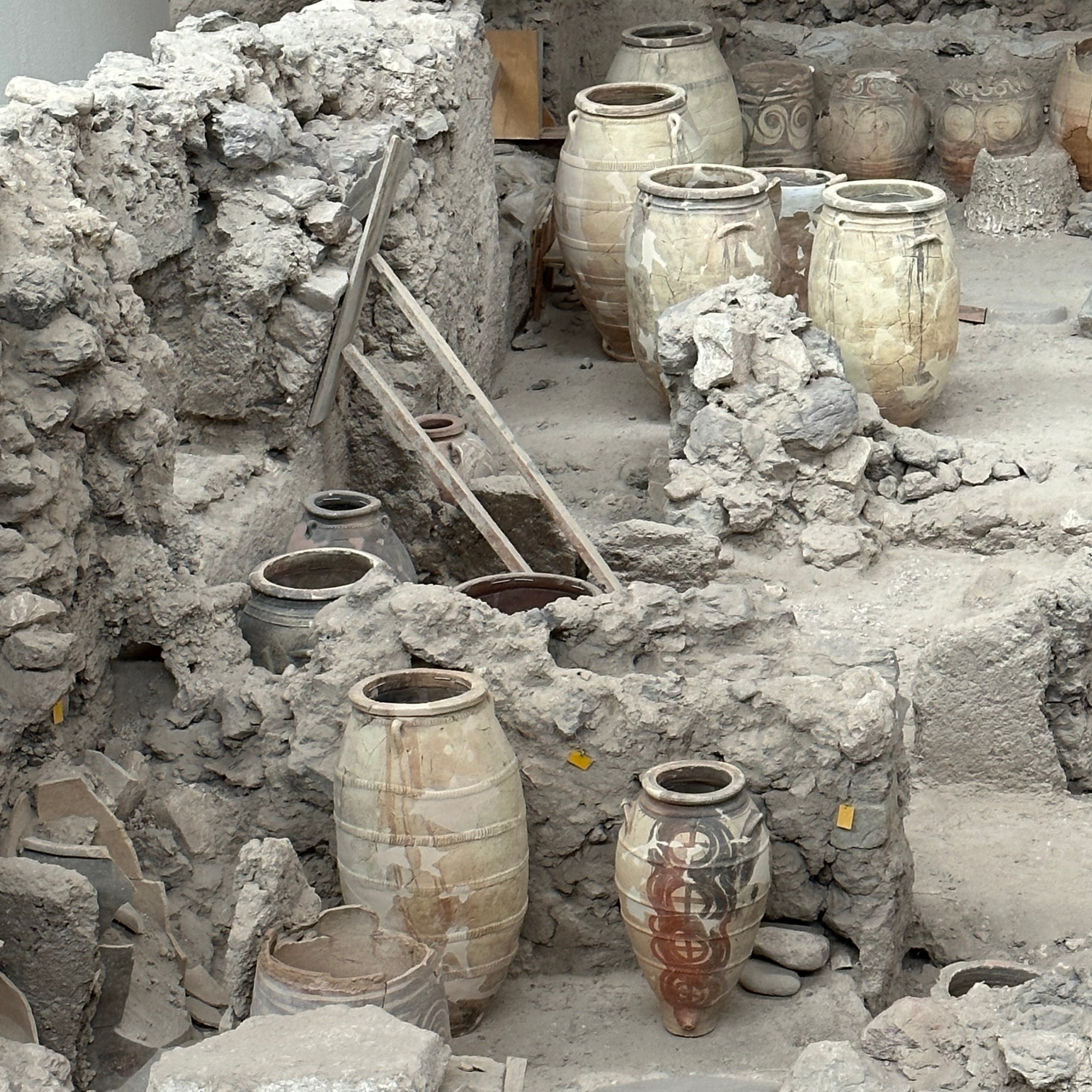
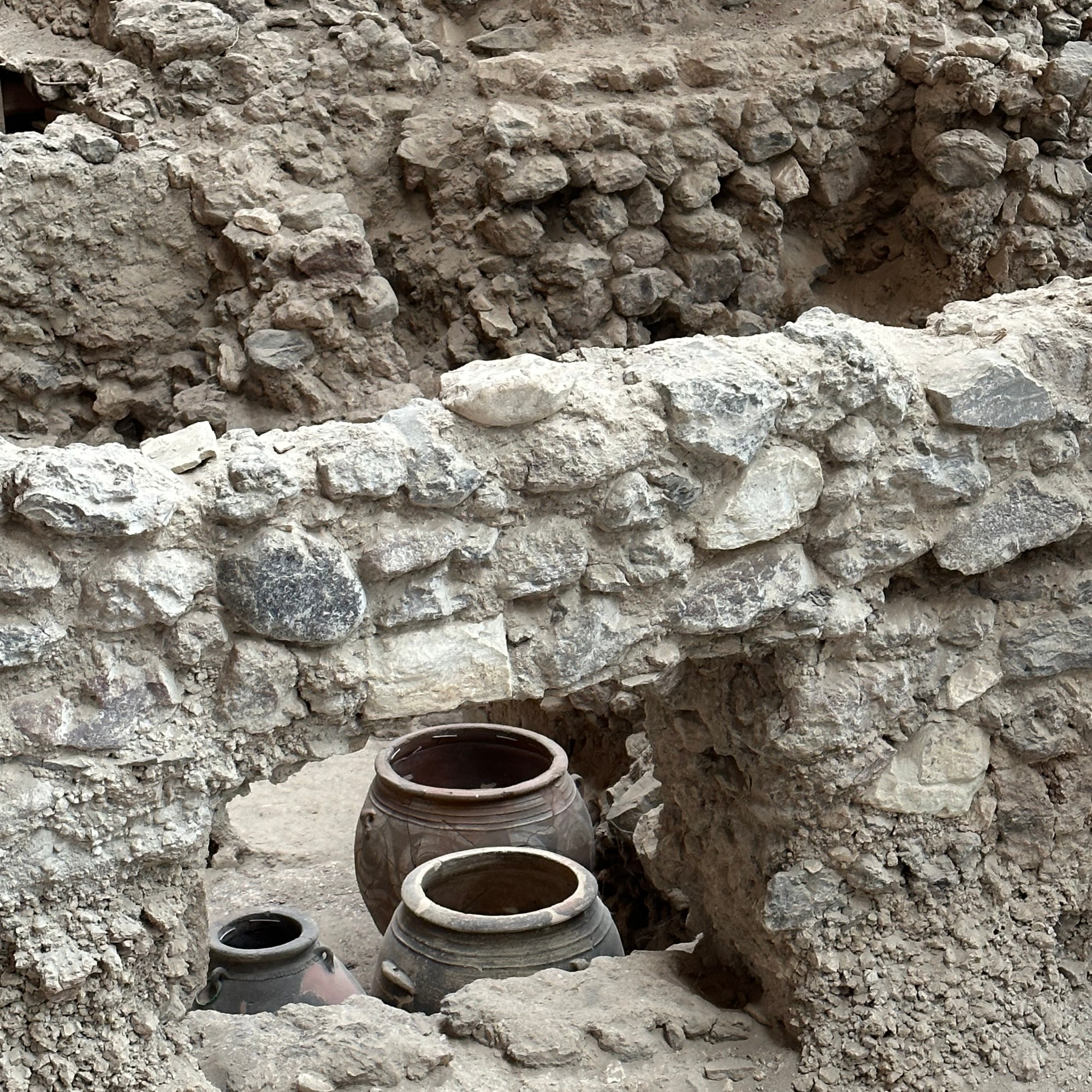
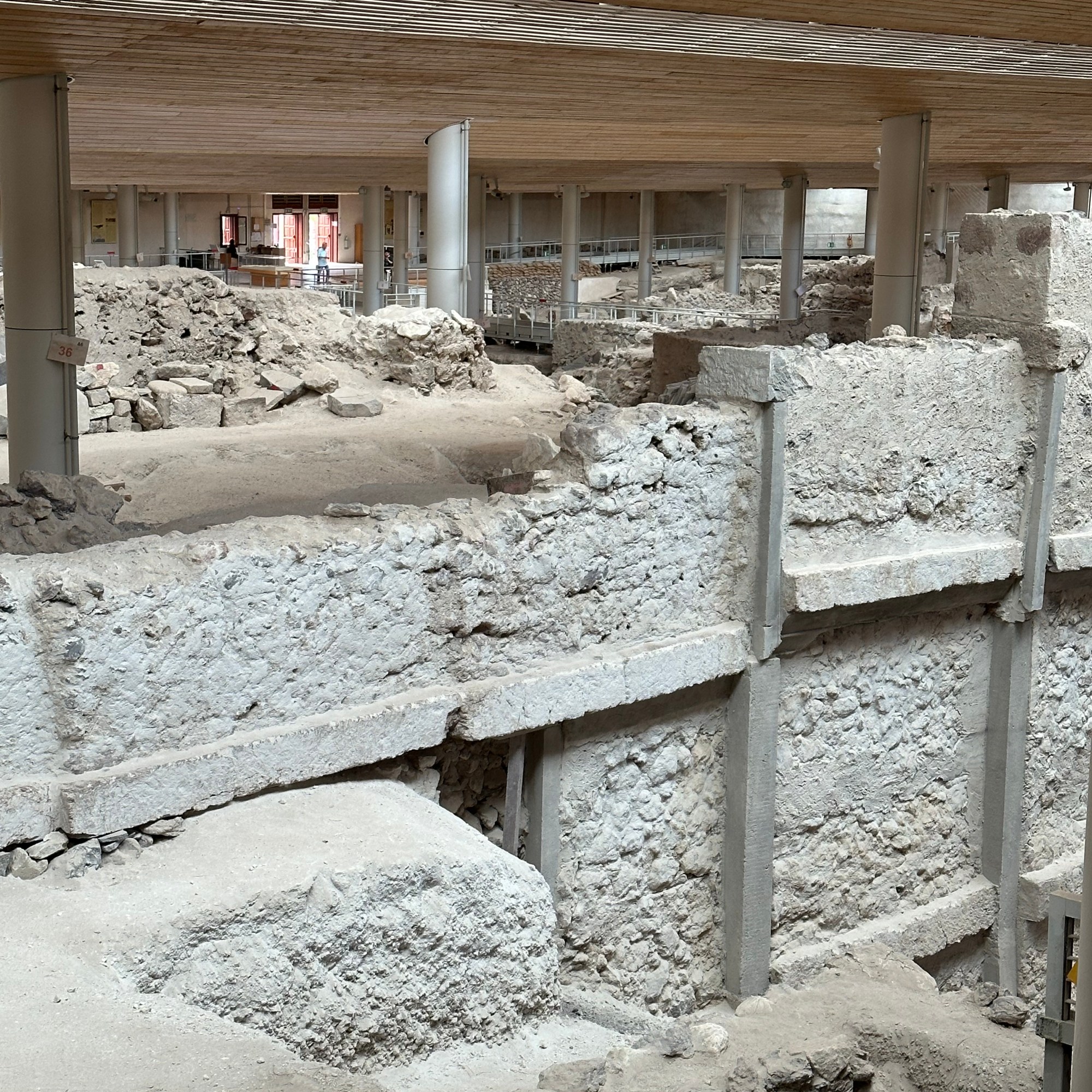
On our recent trip to Santorini, we visited an excavation site called Akrotiri which is a foregone Bronze Age City. It was incredible to see what archaeologist have unearthed, and to learn this was a civilization that had been part of the Minoan culture. 

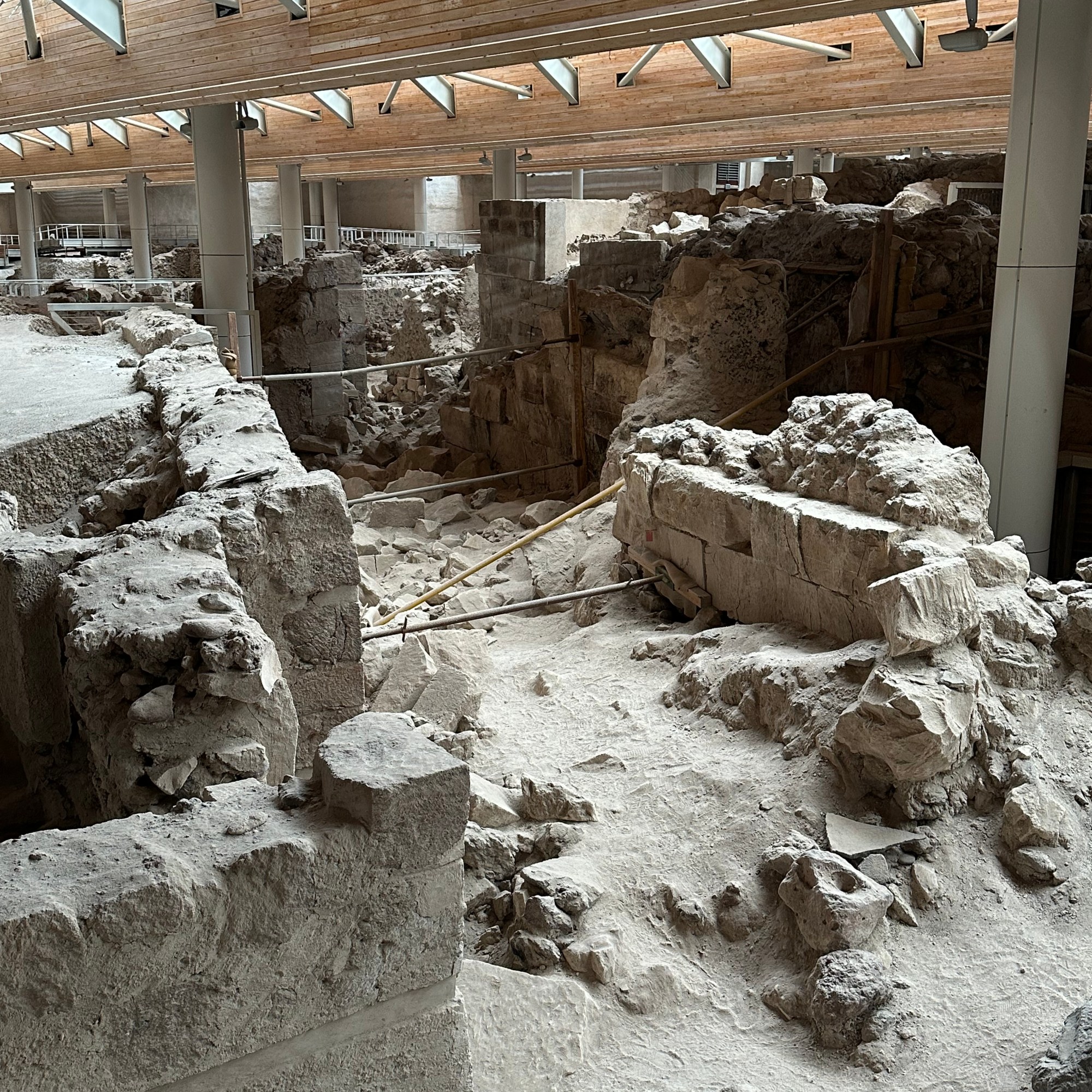
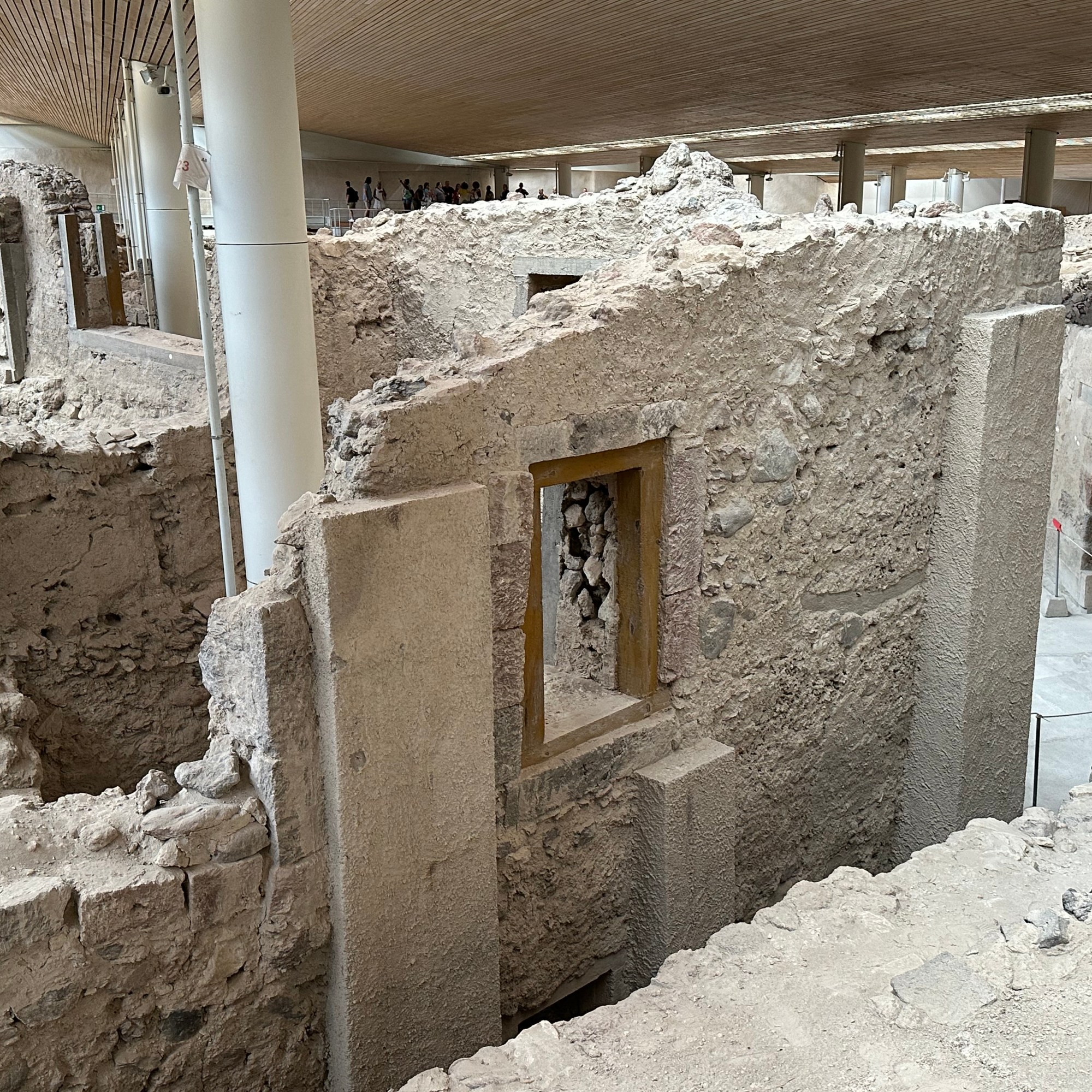
Our guide stated that Akrotiri was a 3,600-year-old city that had been buried in ash from an enormous volcanic eruption in 1650 BC, that decimated all life on the island and erased an entire city-state. The ruins now serve as a time capsule for contemporary scientist and art historians who learn more each day about these early inhabitants.

The island was referred to as Thira 3,600 years ago after their mythical ruler Theras. The Minoan’s who flourished here and on the nearby island of Crete were annihilated by the cataclysmic ash cloud that formed over what was left of island for two years.

According to ancient writers this eruption plunged the earth into a period of global cooling.

To walk thru this archeological wonderland is a phenomenal experience, and incredible to witness. Seeing this ancient township took me back to my early college days of art history, and studying the very small section on Minoan culture. One can see frescos on walls, various artworks and object d’art as well as experience the culture.

Stay tuned for more adventures,
Kathleen
Haifa Israel

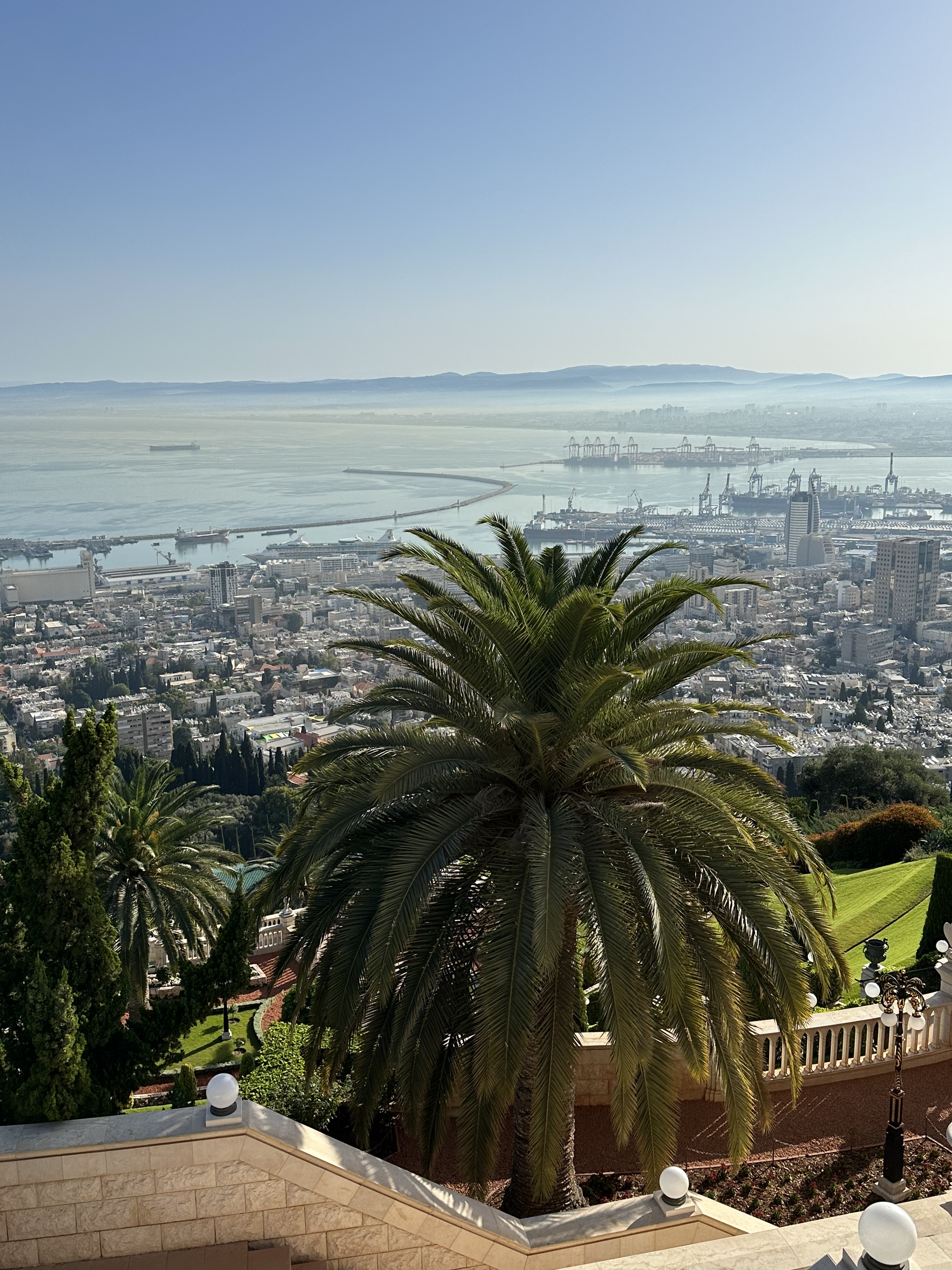
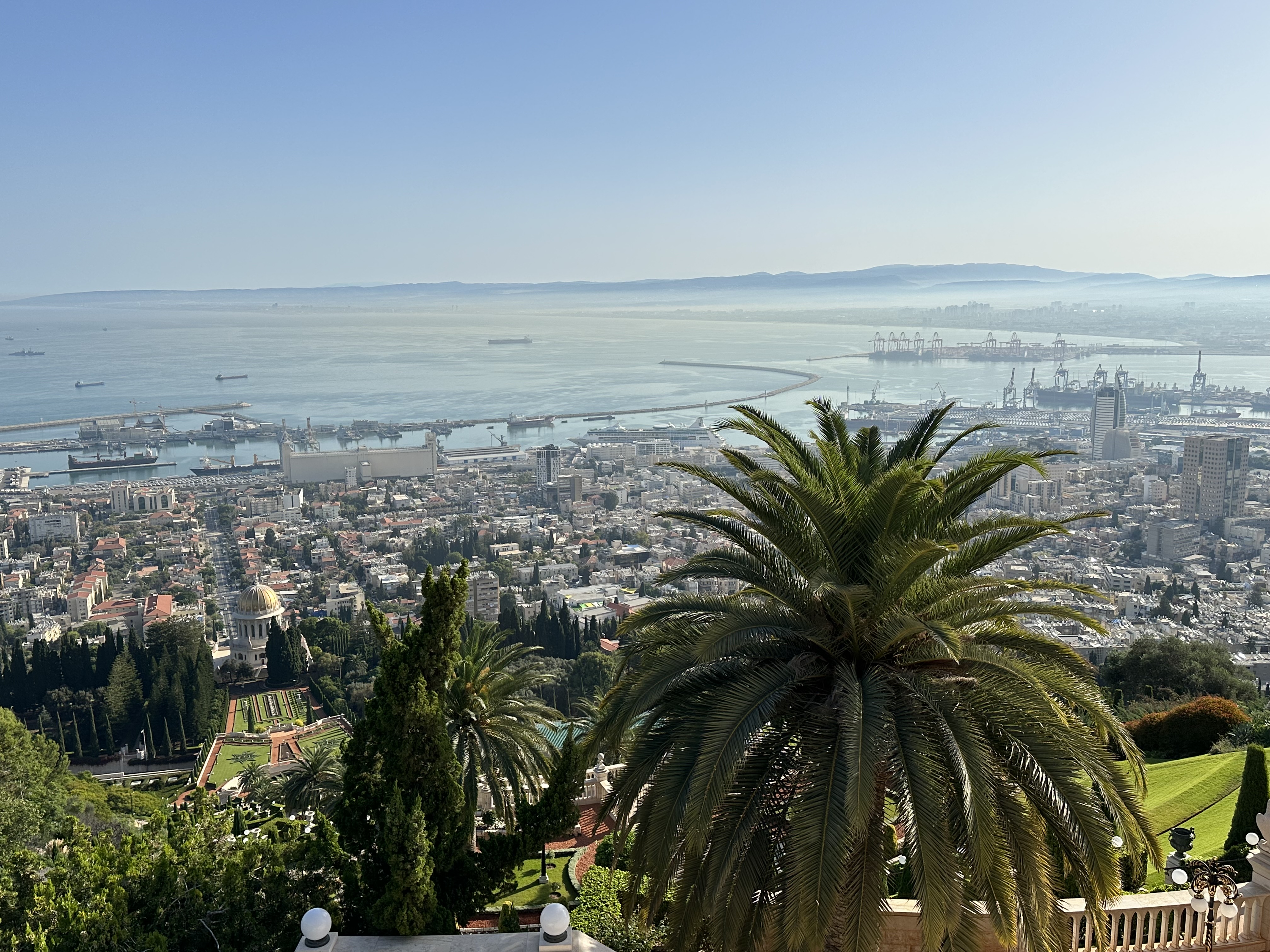
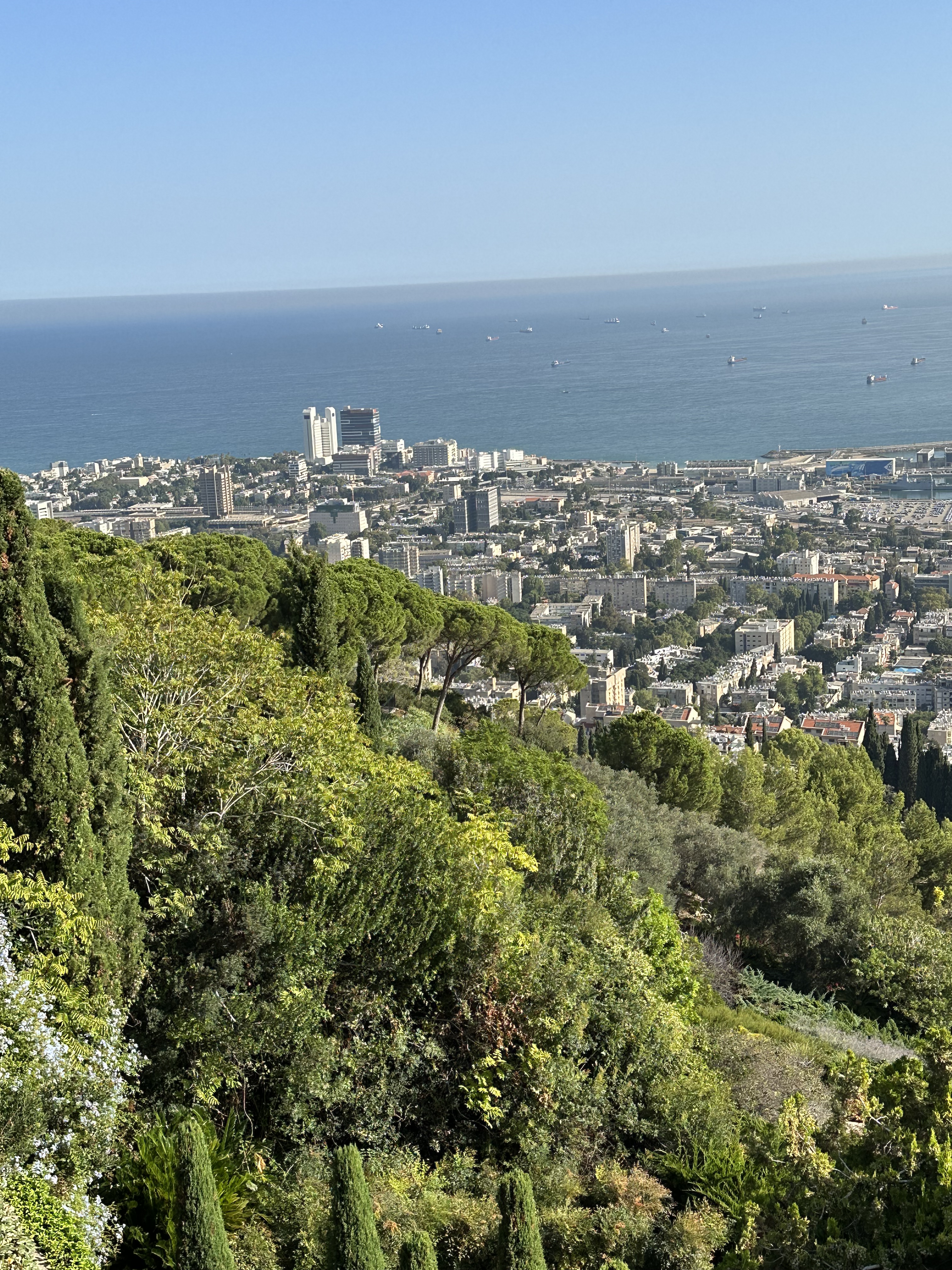
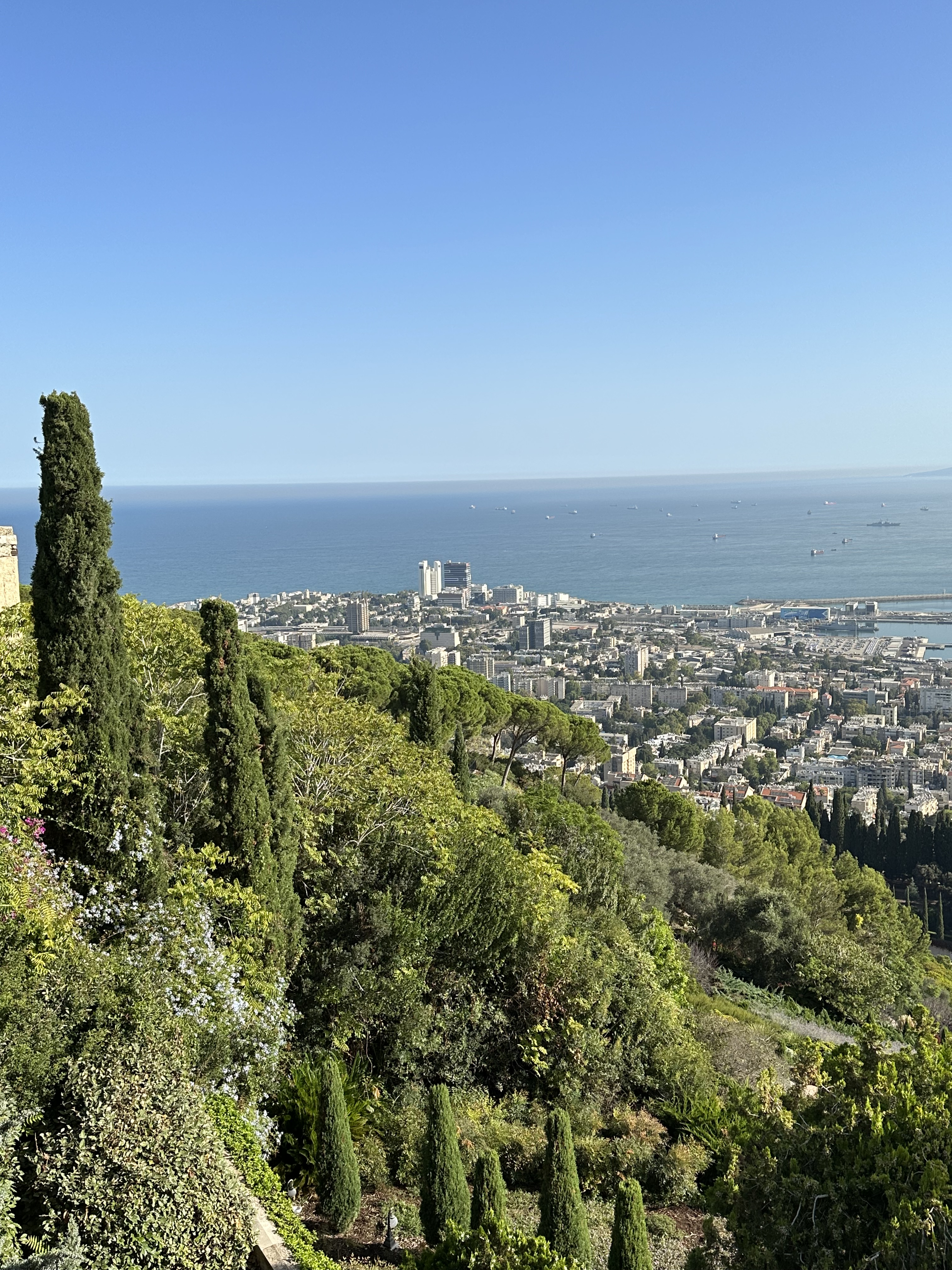
Bahai Garden Haifa overlooking the Mediterrean Sea

Located in northwestern Israel, Haifa is situated on the slopes of Mount Carmel and faces the Mediterranean Sea. Our first stop was to the Bahai Gardenss that consisted of concentric circles filled with flowers, small trees, small sculptures, water fountains and pools. The sides of the gardens are wooded areas designed to house wildlife and to cut down on urban noise.

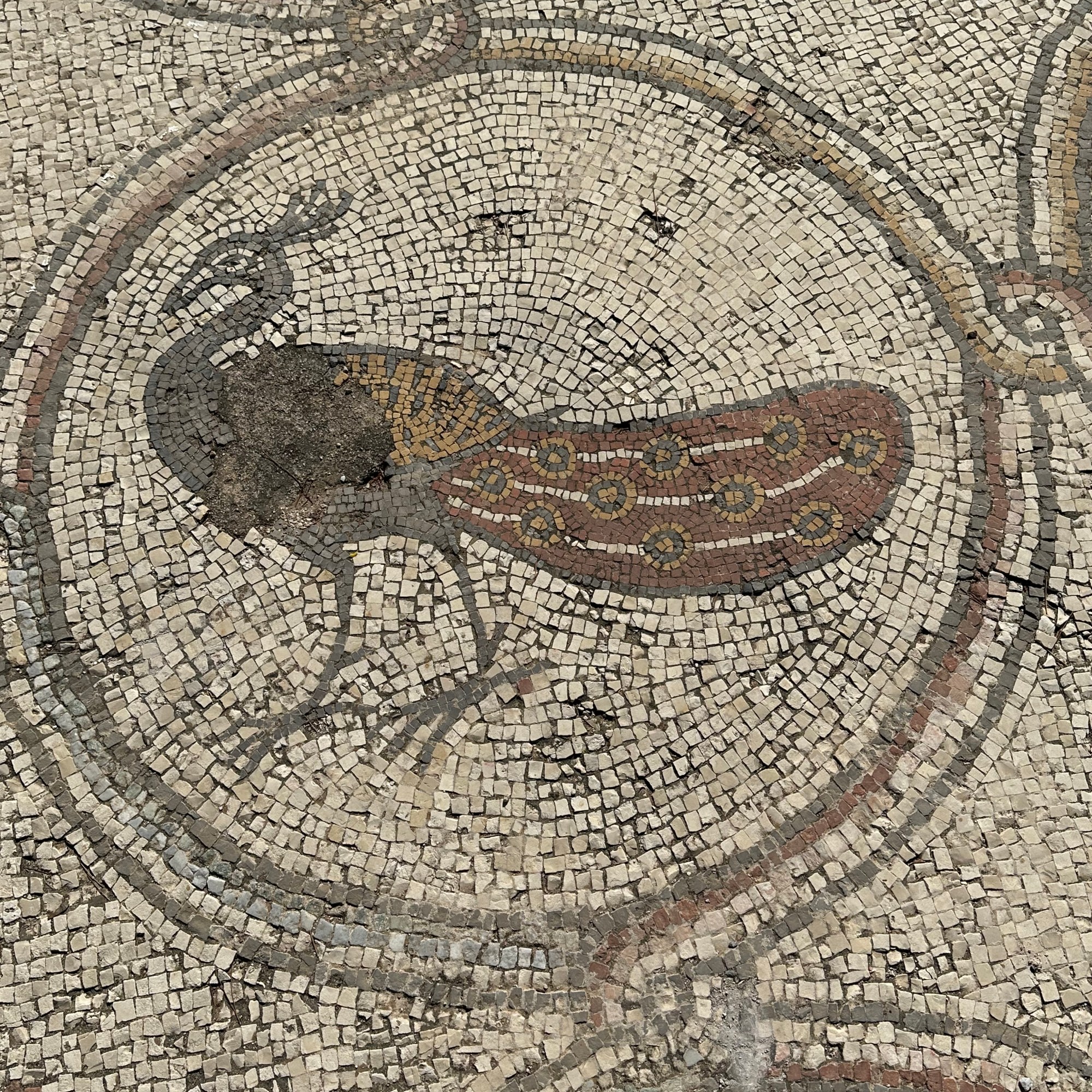
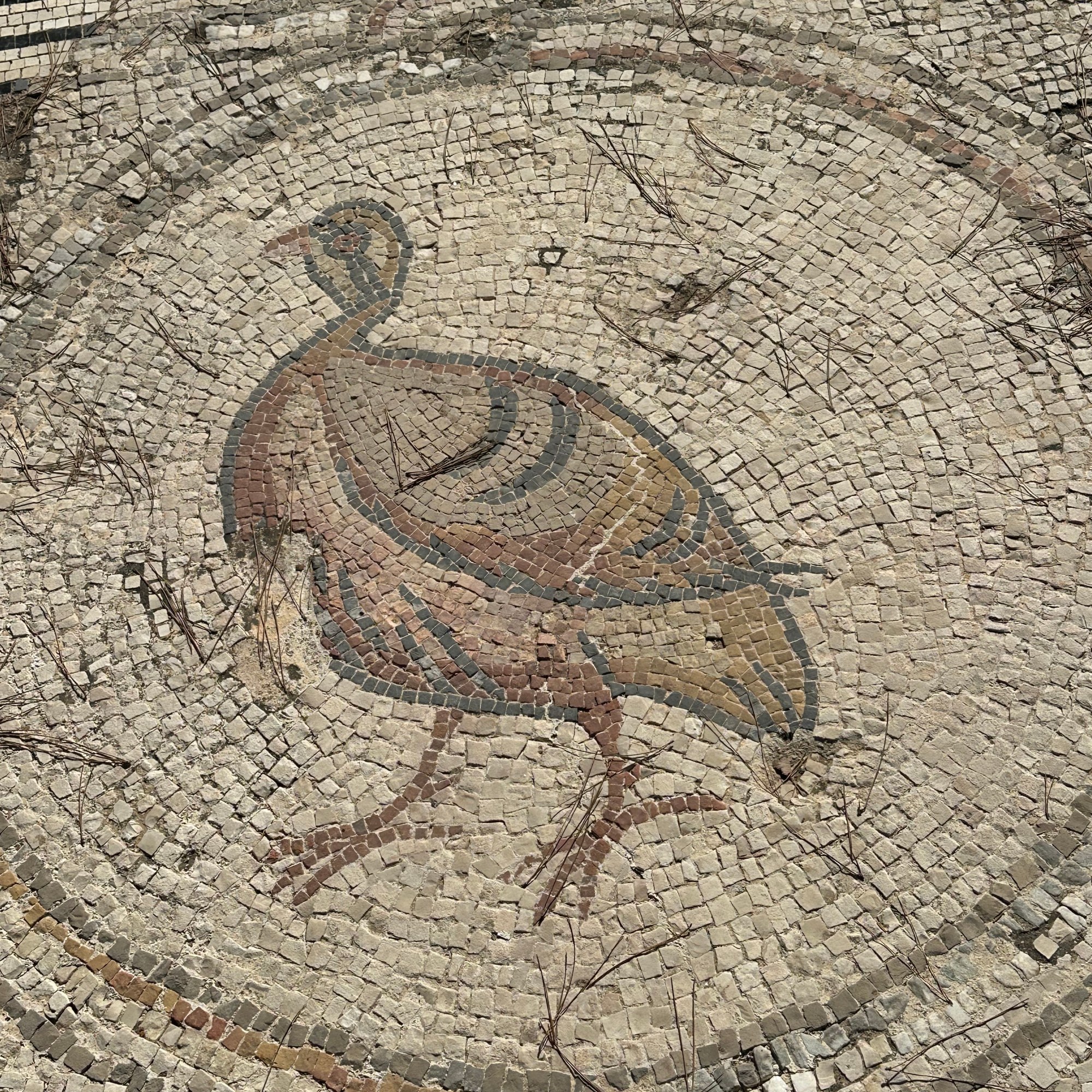
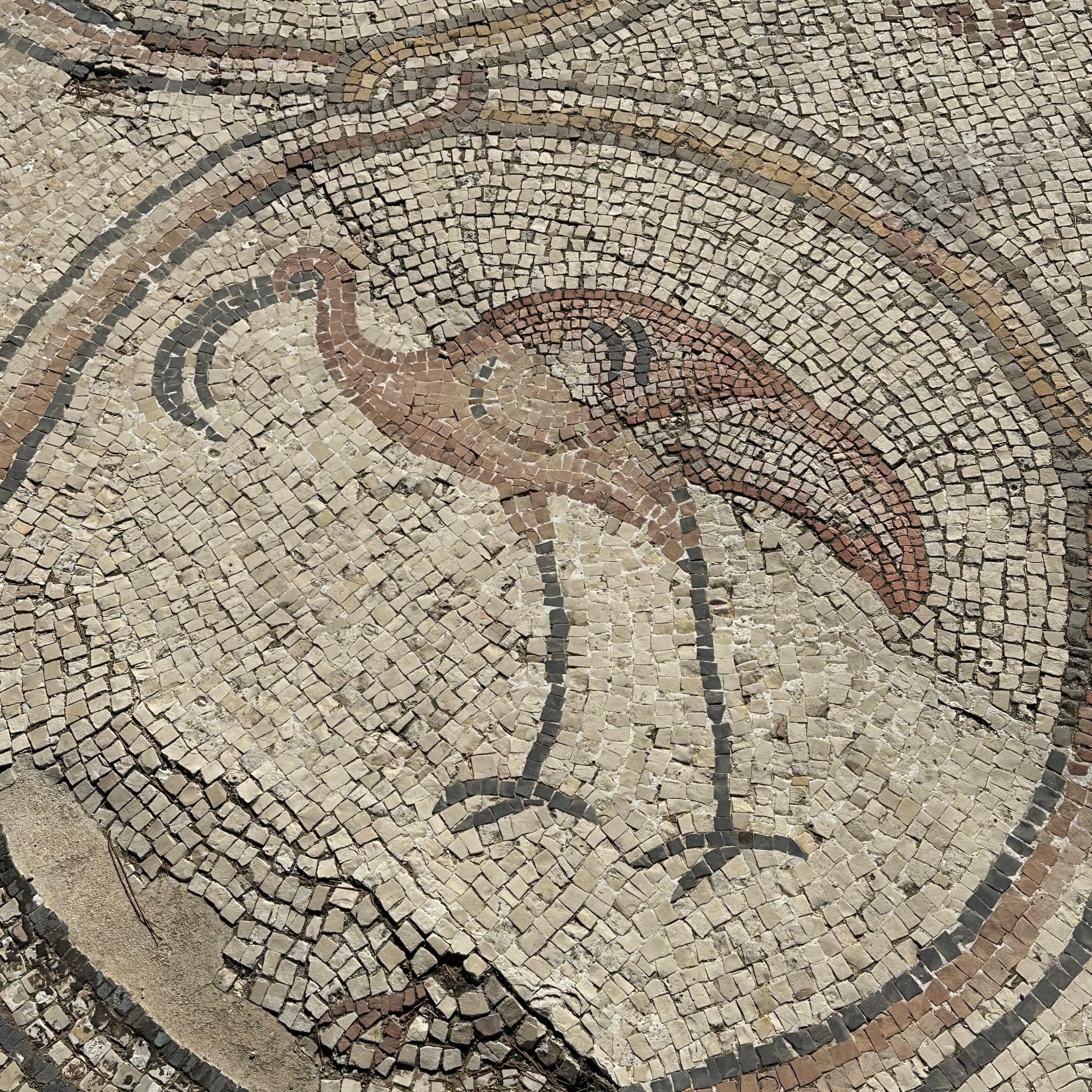
Birds Mosaic in Caesarea

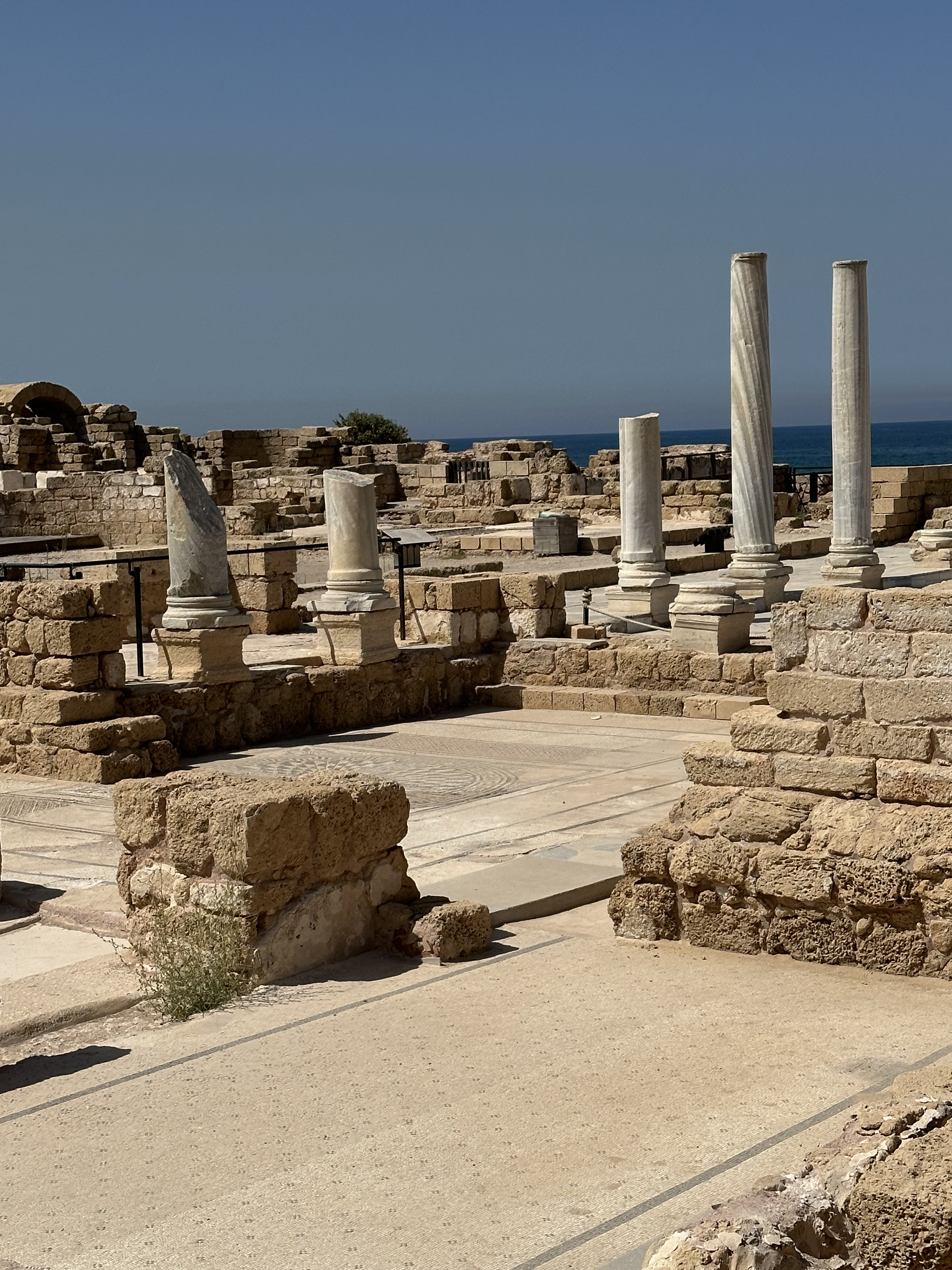
On a sandhill outside the Caesarea walls are the remnants of an excavated mansion. The complex included mosaic paved rooms, porticos and patios that were built around a central courtyard. Fragments indicate the building was two stories, and on the ground level mosaic floors have been found intact. The mansion burned down after the Arab conquest in 640 CE, but part of the building was excavated in 1955 revealing a mosaic pavement of the central courtyard that portrays animals, birds, and fruit trees.

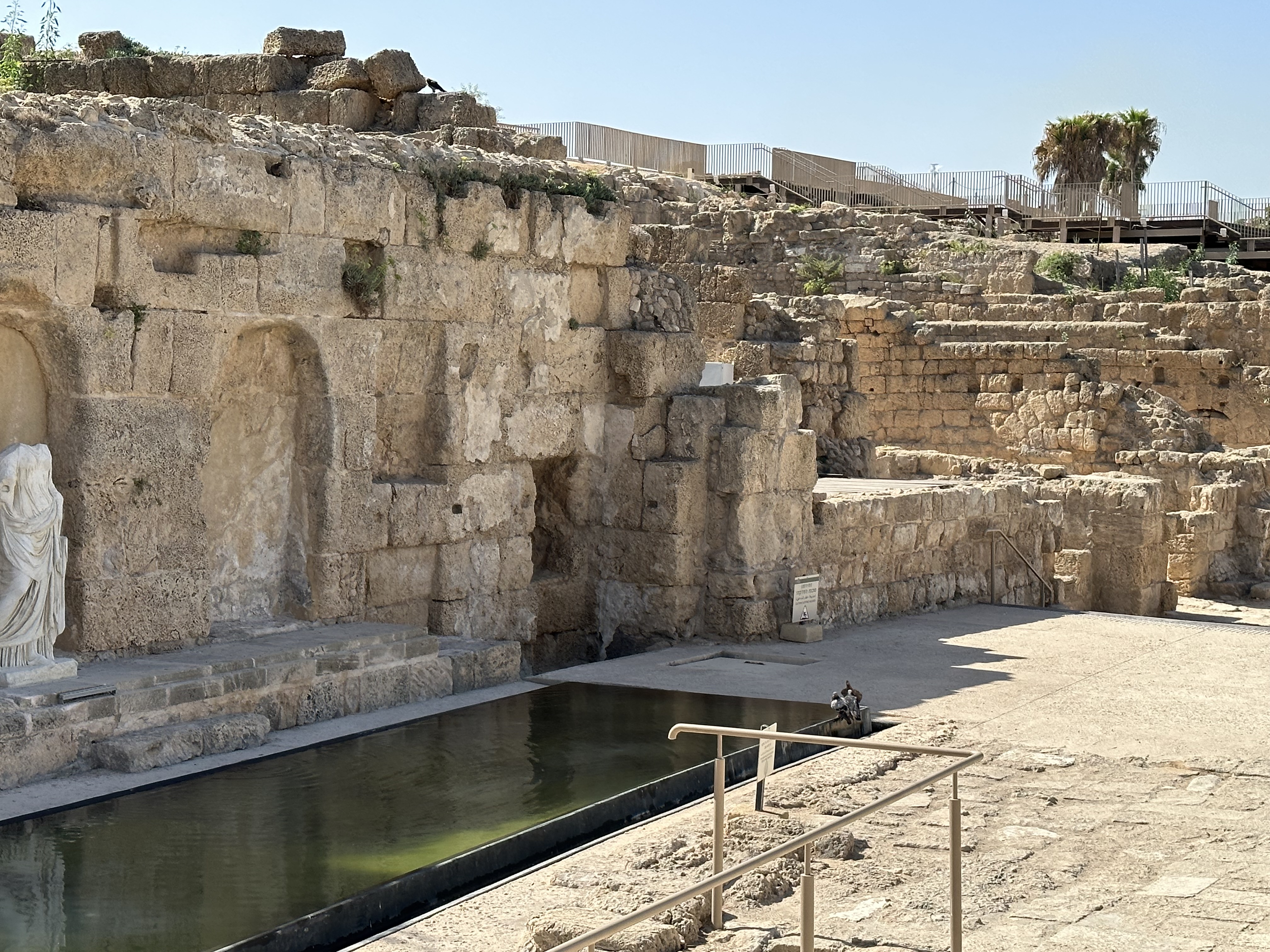
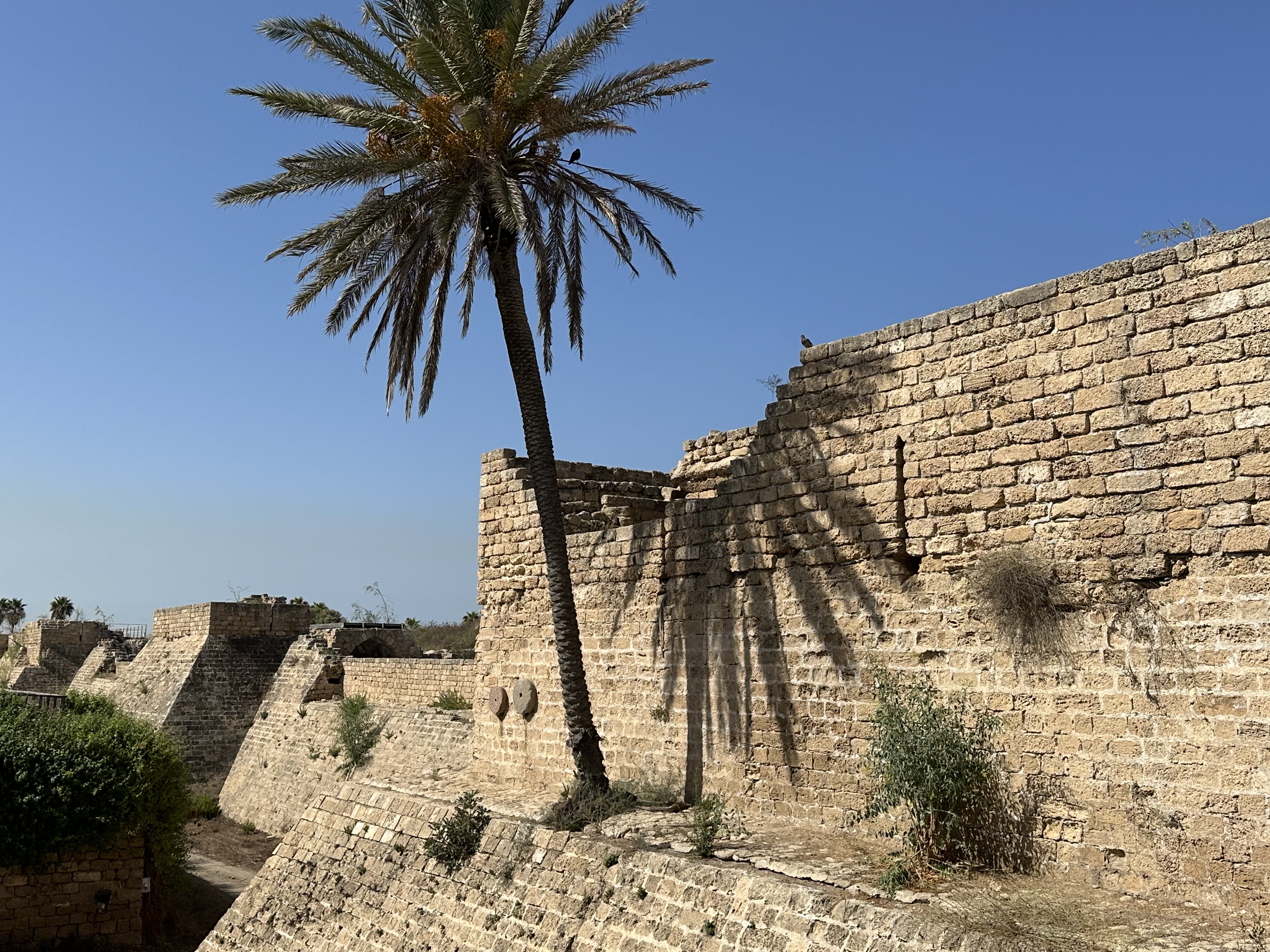
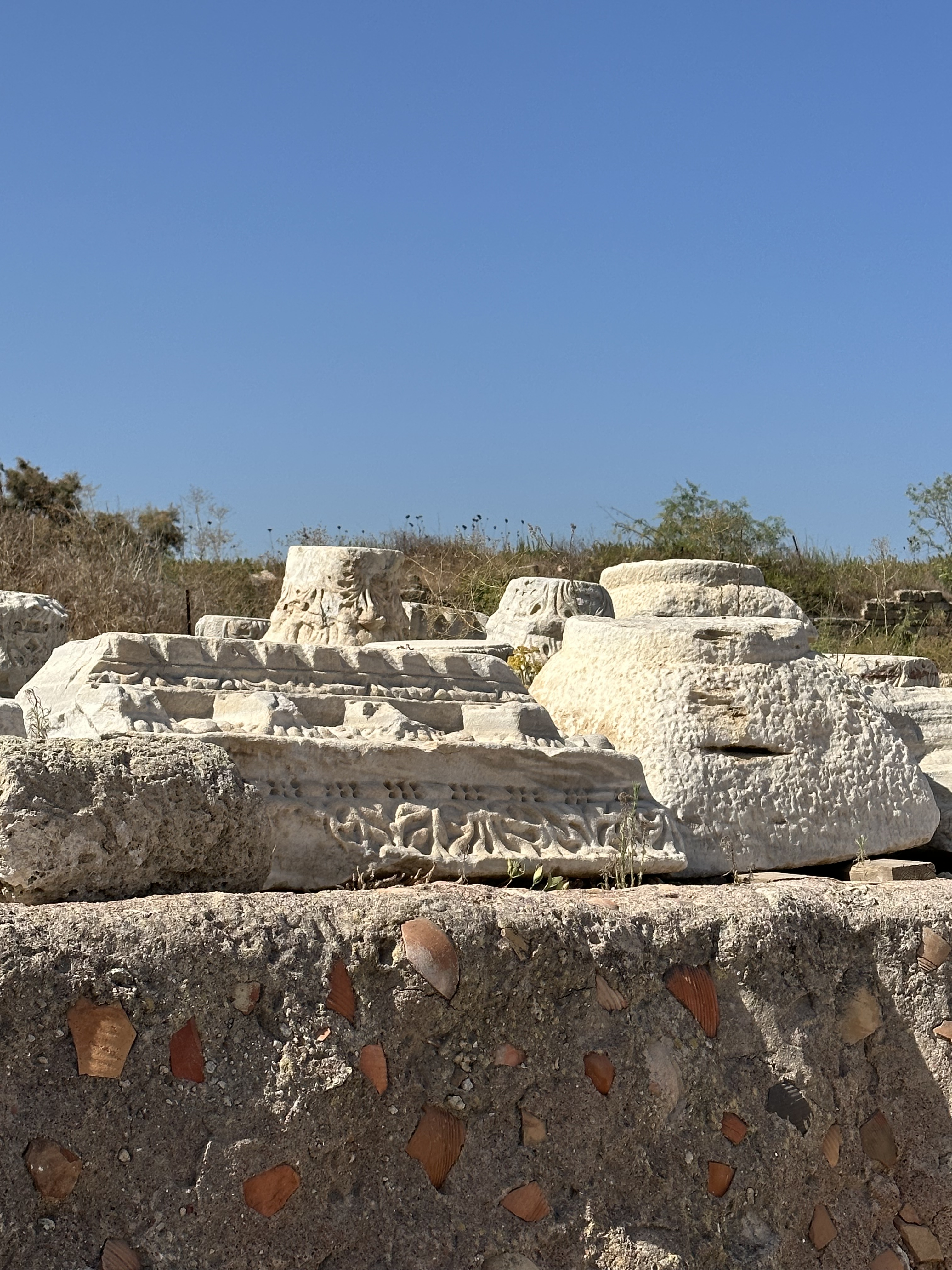
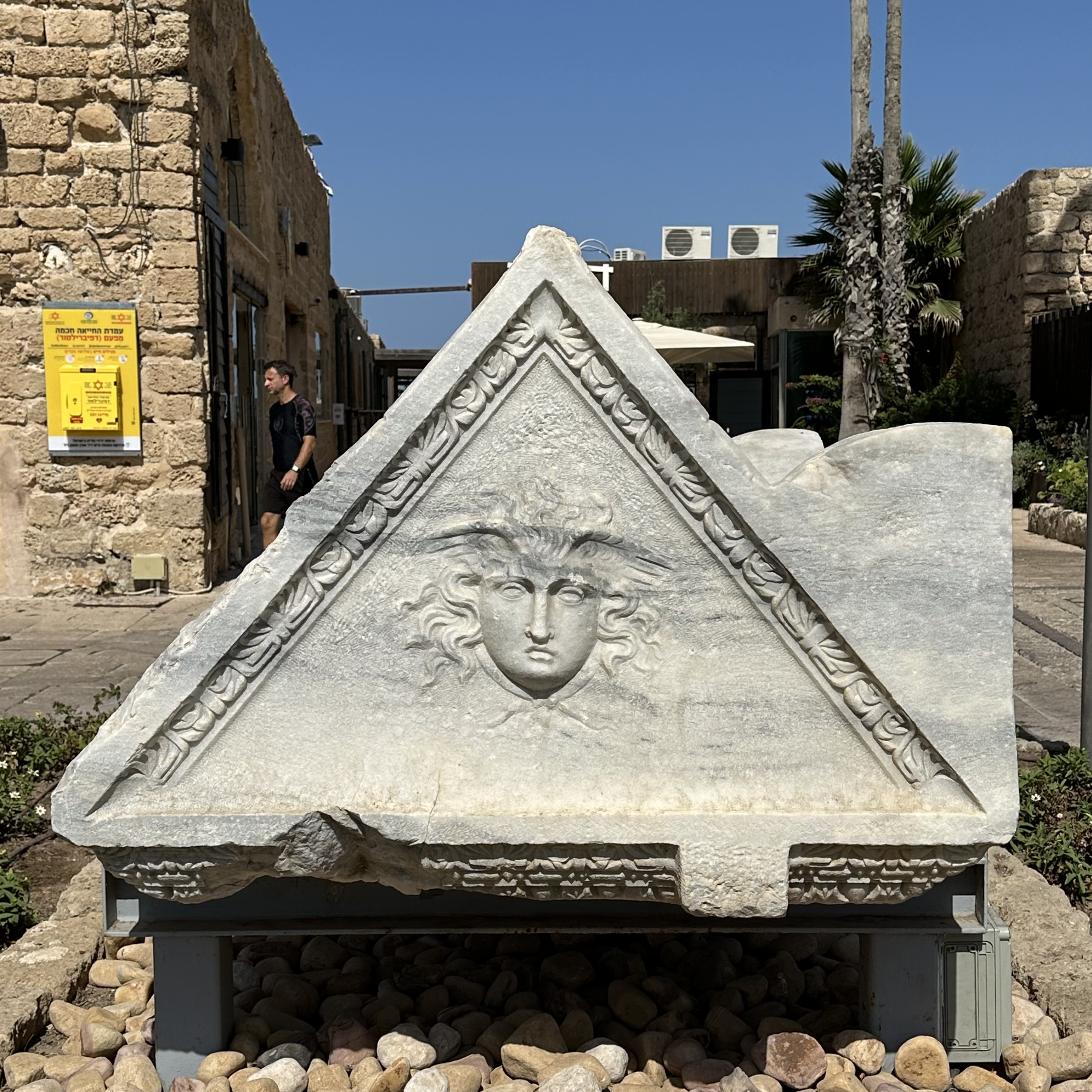
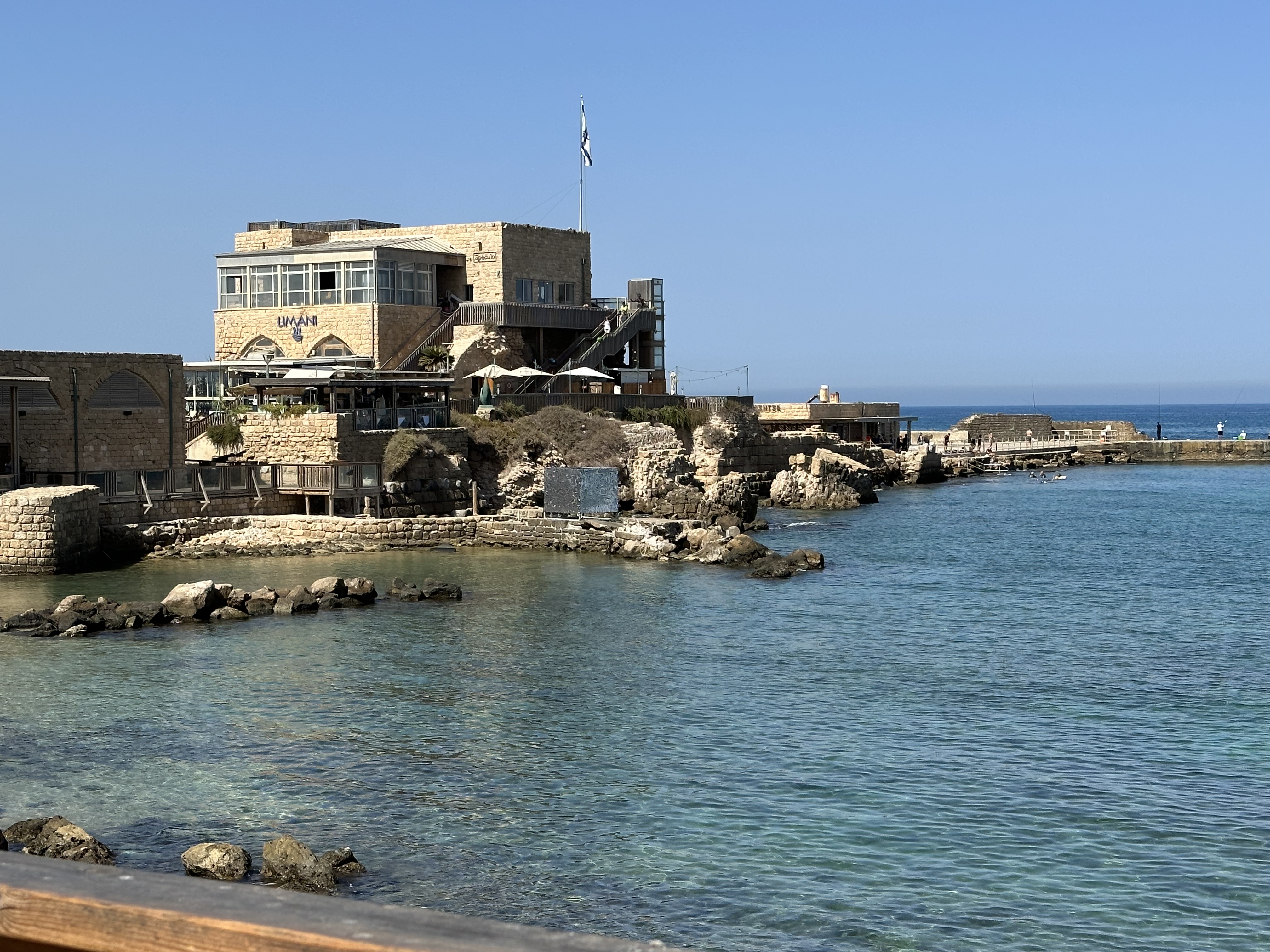
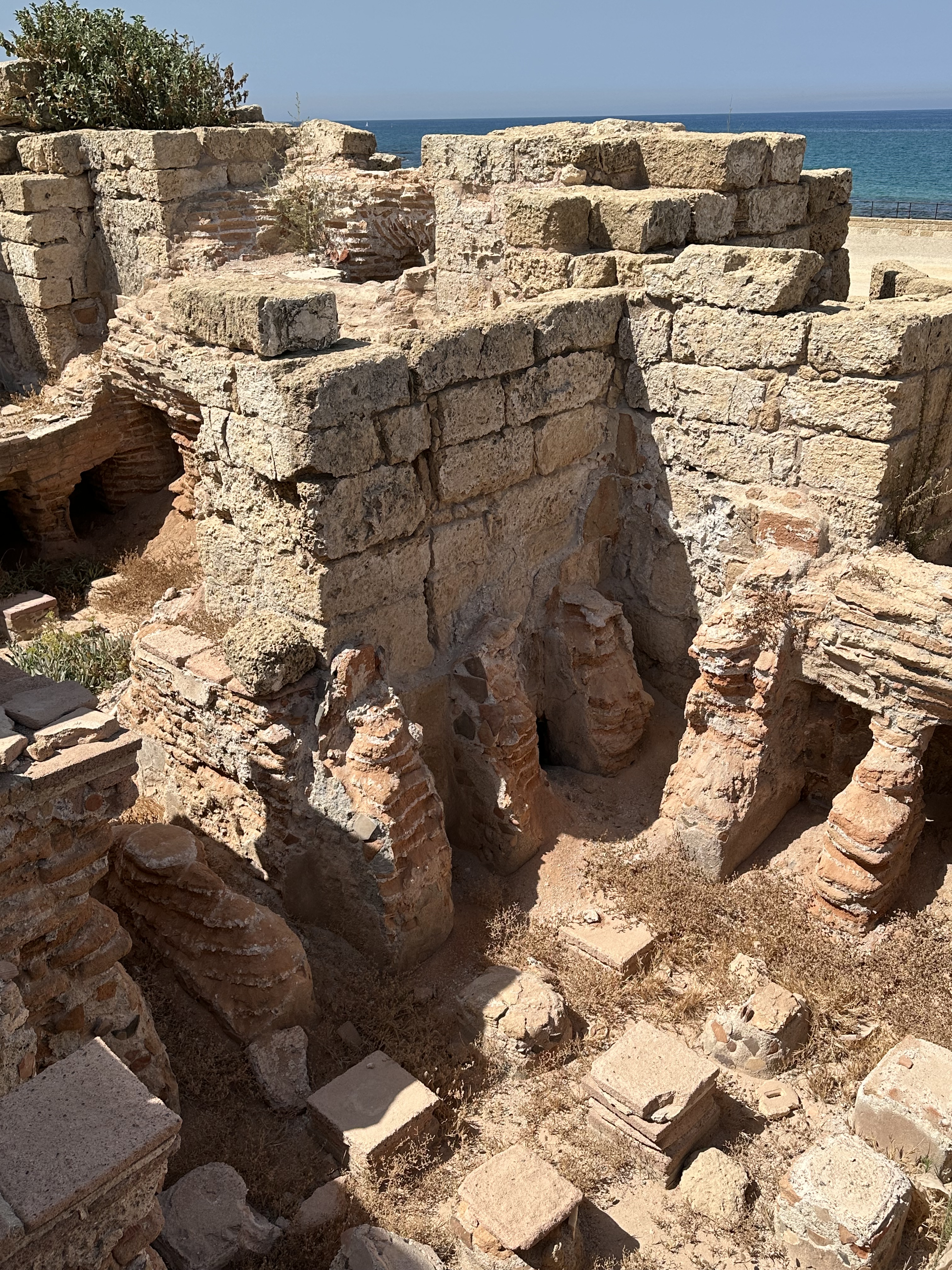
Ruins of Caesarea

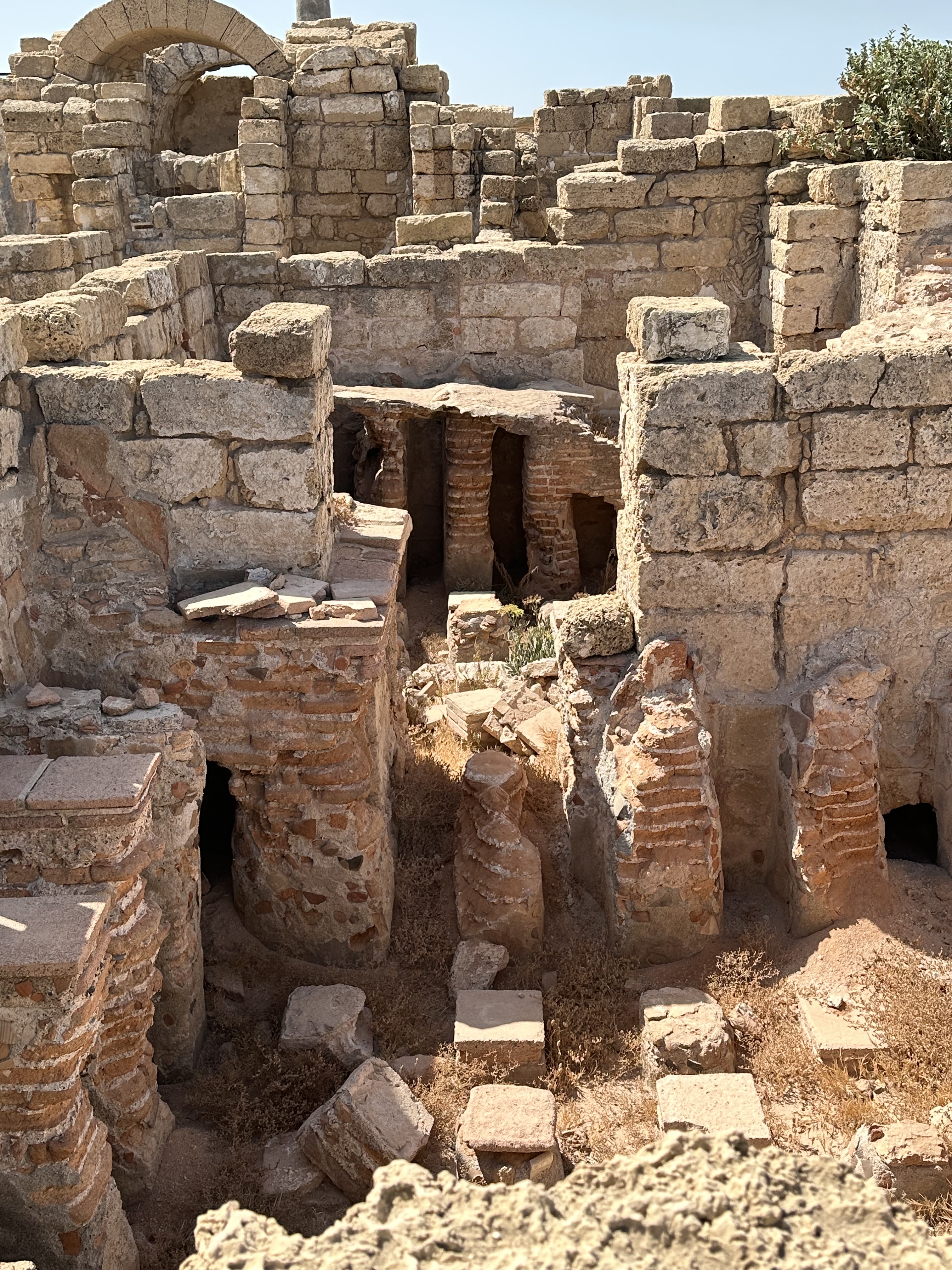
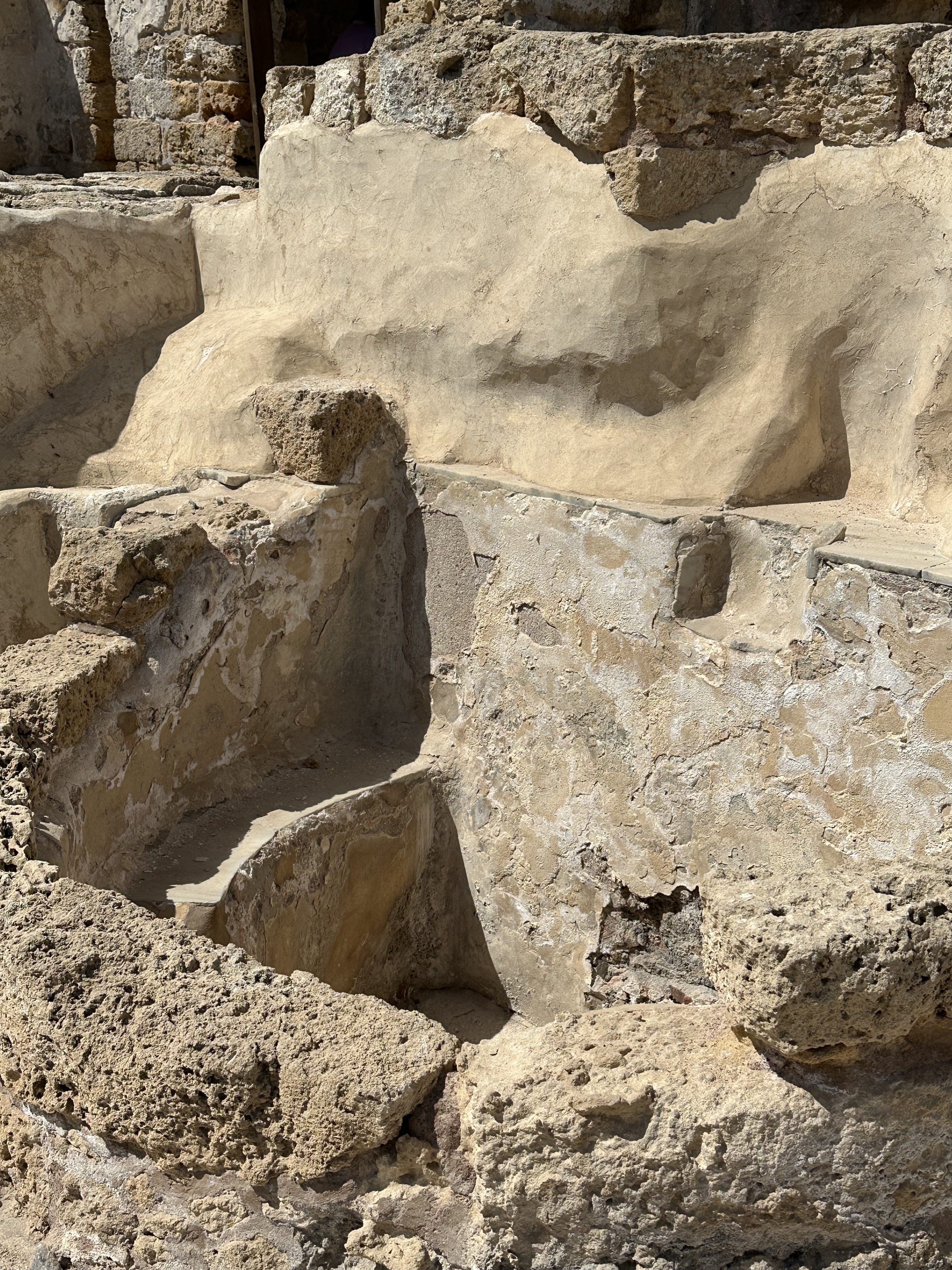
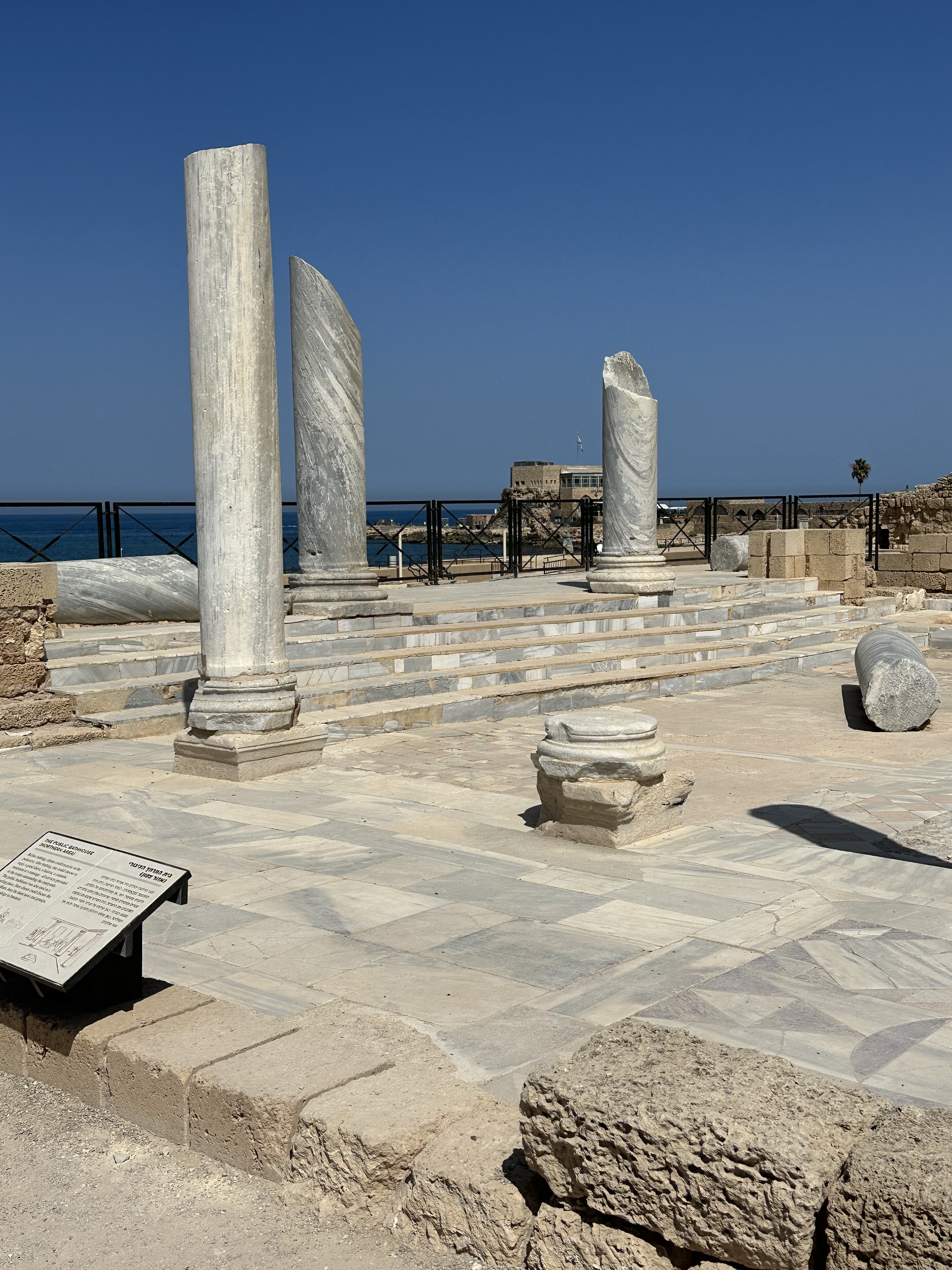
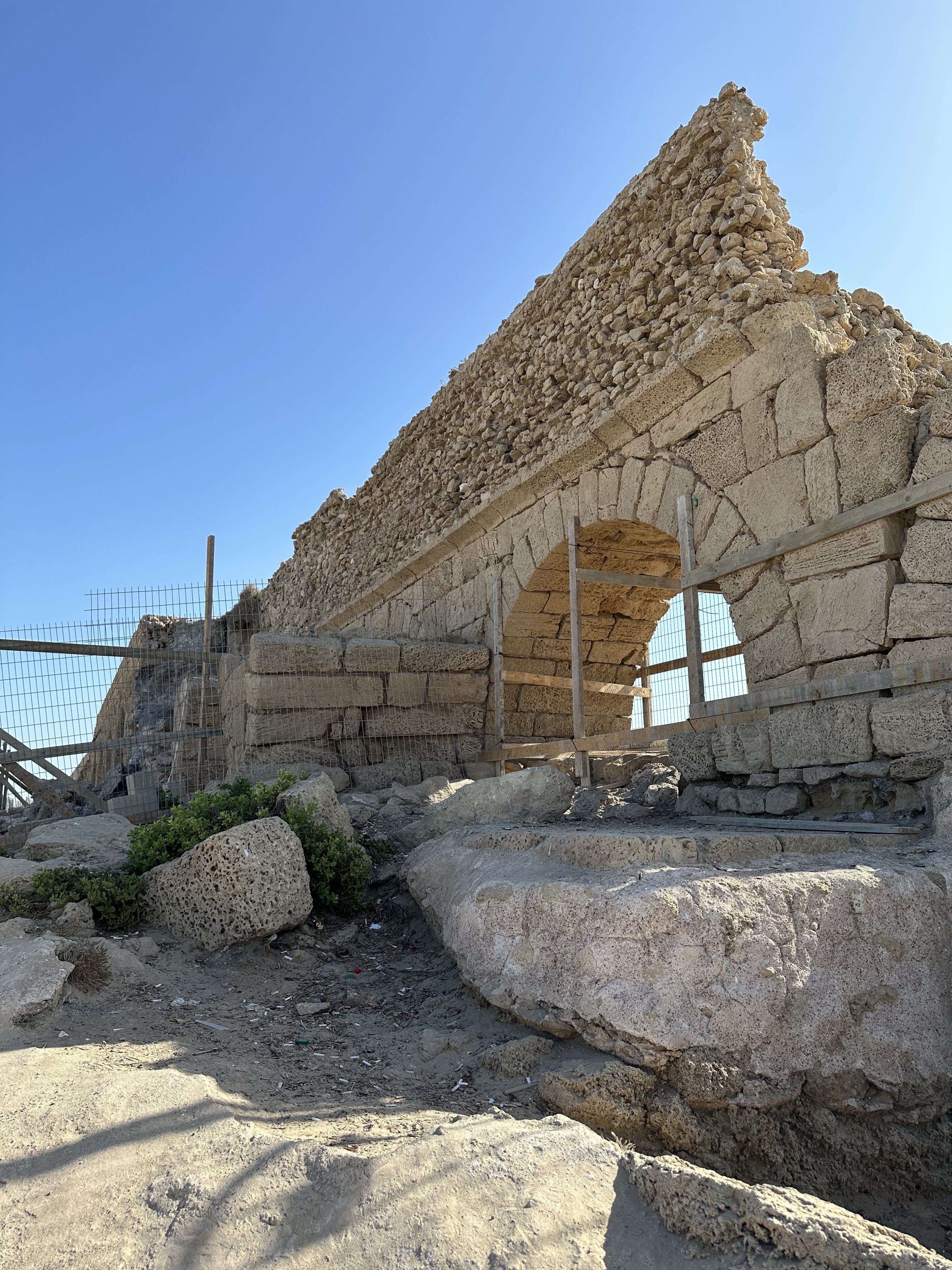
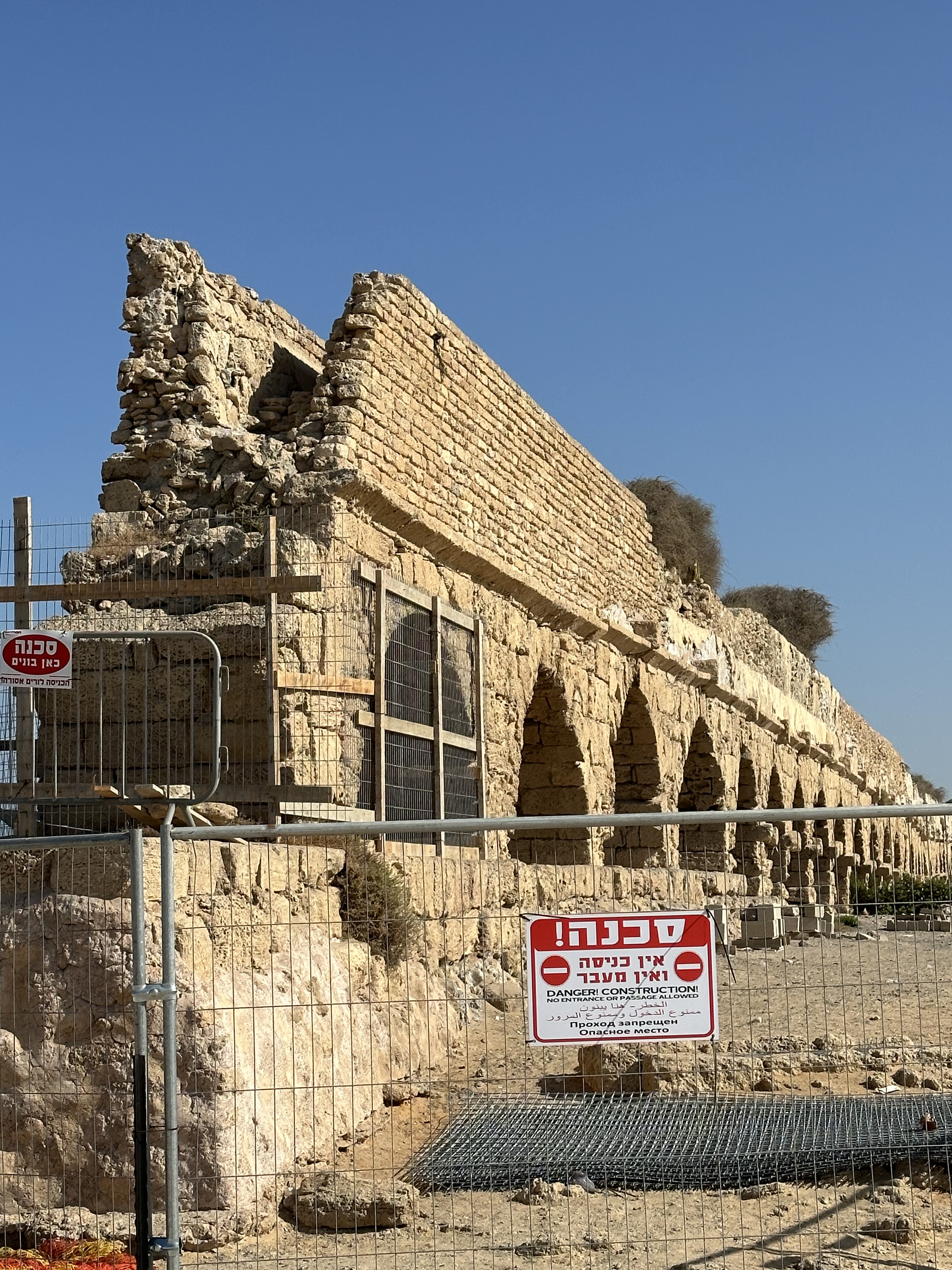
Originally an ancient Phoenician settlement known as Strato’s Tower was rebuilt and enlarged in 22-10 BCE by Herod, king of Judaea under the Romans and renamed for his patron [emperor Caesar Augustus]. Caesarea had an artificial harbor of large concrete blocks and typical Hellenistic-Roman public buildings. The aqueduct which you can still see brought water from springs located almost 10 miles (16 km) to the northeast, and this compound also served as a base for the Herodian navy.

To see remnants of this ancient city are incredible. Teams have been excavating since 1950 and have unearthed a Roman temple, amphitheater, and a hippodrome that can seat 20,000. Further excavations on land and underwater are giving a clearer picture of the artificial harbor built by Herod the Great.

Stay tuned,
Kathleen